

A solar pool cover, also sold as a solar blanket, is a sheet of UV-stabilized polyethylene bubbles that floats on the water bubble side down. It holds heat in two ways: it stops evaporation and it insulates the surface. To size one, measure your pool, buy the next standard size up, and trim it to fit. To make it last, keep it shaded and covered whenever it's off the water. We wrote this pool solar cover guide for Los Angeles residential pools, where the sun shines all year.
First, a warning: a solar blanket is not a safety cover. If you need a barrier for kids or pets, our pool safety cover guide is the better place to start.
How a Pool Solar Cover Retains Heat and Reduces Evaporation
What a solar blanket is made of
A solar cover is a floating bubble sheet made from polyethylene, the same family of plastic used in bubble wrap. Better covers include UV inhibitors, so the plastic lasts longer in direct sun. "Solar cover," "solar blanket," and "bubble cover" are three names for the same product.
Where a pool actually loses its heat
Here is why a cover works. Evaporation pulls more heat out of a pool than anything else. The U.S. Department of Energy's Energy Saver guide to swimming pool covers calls evaporation by far the largest source of energy loss in pools. A floating cover blocks most of that loss. The air trapped in each bubble insulates the surface, and sunlight still passes through to warm the water.
Nighttime is when the cover earns its keep. An uncovered pool gives back the heat it collected during the day as soon as the sun goes down.
Why the bubble side goes down
Lay the cover bubble side down, touching the water, with the flat side facing the sky. That places the air pockets right against the water, where they insulate best, and it shields the bubbles from direct UV and foot traffic. Lay it upside down and it holds less heat and wears out faster.
Cover color changes how much the water warms
Color matters a little, because it controls how much sunlight reaches the water.
| Cover color | What it does | Best for |
|---|---|---|
| Clear | Lets the most sunlight through | Owners who want the most solar warming |
| Blue | Balances warming with some light blocking | Most LA backyard pools |
| Dark or silver-backed | Blocks or reflects more light, less warming | Owners who want to keep water cooler or limit sunlight |
My honest take: clear or blue is the right call for most Southern California pools.
Pool Evaporation Loss Doesn't Stop in an LA Winter
In colder regions, a solar cover is a spring accessory. In LA, people use it all twelve months. At our Discount Pool Mart counters, we hear the same complaint every season. Dry air, wind, and steady sun keep pools losing water even in winter. That comes from what we see in our stores, and it matches what customers tell us about their water bills.
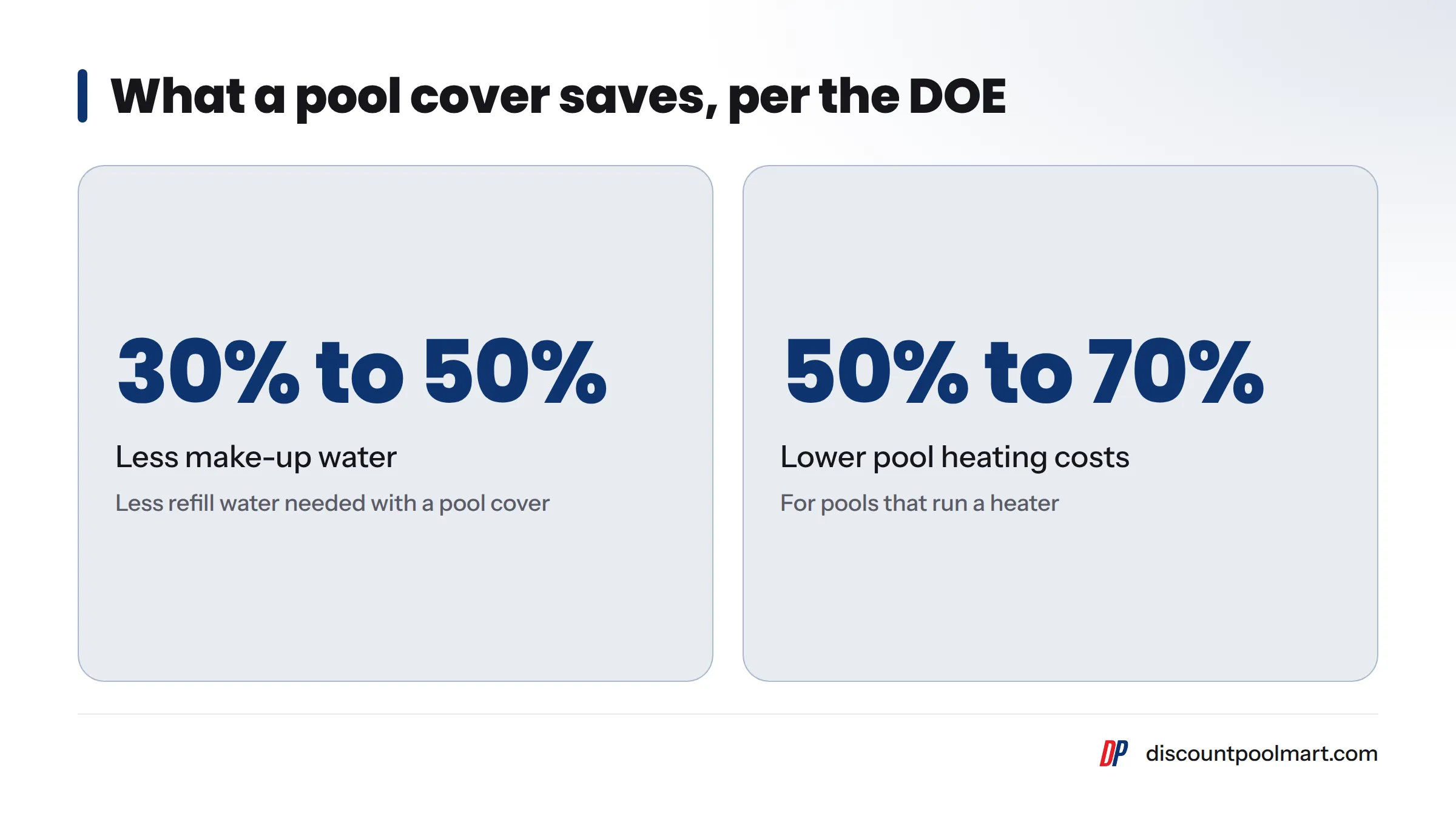
Evaporation costs you heat and water at the same time. Each refill also dilutes your water balance, so you end up retesting and re-dosing more often. According to the DOE, a pool cover can cut the make-up water you need by 30% to 50% (Energy Saver).
Running a heater? A cover helps hold the heat it adds. The same DOE page reports that covers can reduce pool heating costs by 50% to 70%. For heater choices, see our pool heater guide.
Step 1: Measure Your Pool and Size the Solar Cover
Measure the water, not the deck
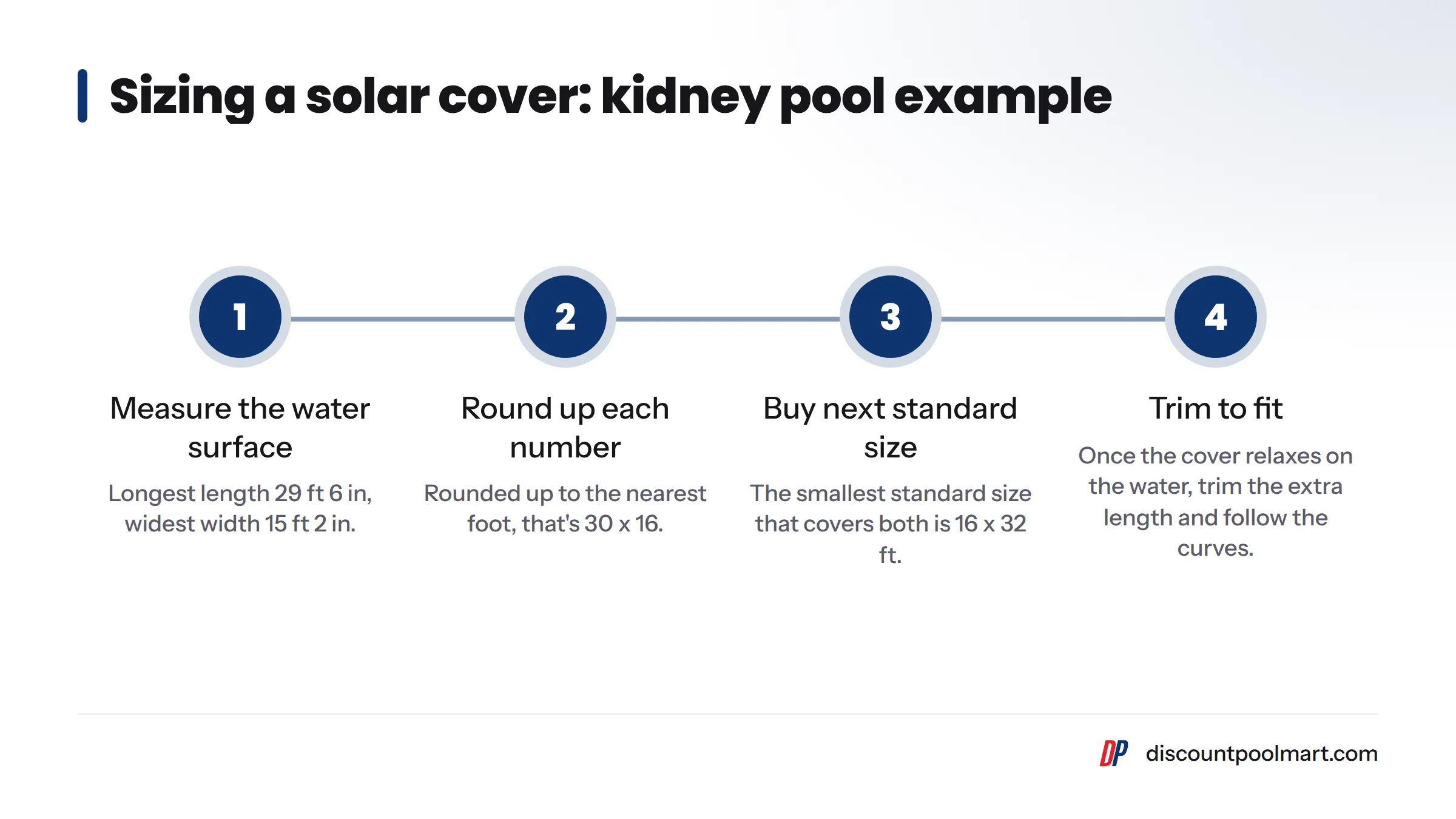
Measure the longest length and the widest width of the water surface, just inside the coping at the waterline. Round each number up to the nearest foot. The method is the same whether you're sizing a solar cover for an inground pool with straight walls or one with curves.
What you need:
- Tape measure (25 ft or longer)
- Notepad or phone
- A helper to hold the far end
- Notes on steps, ladders, skimmers, and spillways
Buy the next standard size up
Solar covers come as rectangles. You buy one large enough to span the whole pool, then cut it down. If your new cover is a foot bigger than your pool, that's expected. Trim it.
A worked example
Take an illustrative LA kidney pool (this is an example, not a statistic). It measures 29 ft 6 in at its longest and 15 ft 2 in at its widest. Rounded up, that's 30 x 16. The smallest standard size that covers both numbers is a 16 x 32 ft cover. Once it relaxes on the water, you trim off the extra length and follow the curves.
Step 2: Choose Solar Cover Thickness (mil) and Material
What mil means
A mil is one-thousandth of an inch. The number describes how thick the plastic is, and stores commonly sell covers from about 8 to 16 mil.
Thinner vs thicker covers
How thick should my solar pool cover be? Thinner covers weigh less, so one person can handle and roll them more easily. Thicker covers weigh more but hold up better against tearing and sun wear. Under strong Southern California UV, that extra durability pays off.
| Thickness tier | Handling | Durability | Best fit |
|---|---|---|---|
| Thinner | Light, easy to roll | Lower | Small pools, tight budgets |
| Mid | Manageable for most | Moderate | Most LA backyard pools |
| Thicker | Heavy, best with a reel | Higher | Large pools, daily use, full sun |
Polyethylene and UV stabilizers
Every bubble cover eventually breaks down in the sun. UV stabilizers slow that down. In LA, I'd pay a few extra dollars for UV resistance every time.
Do you need a solar cover reel?
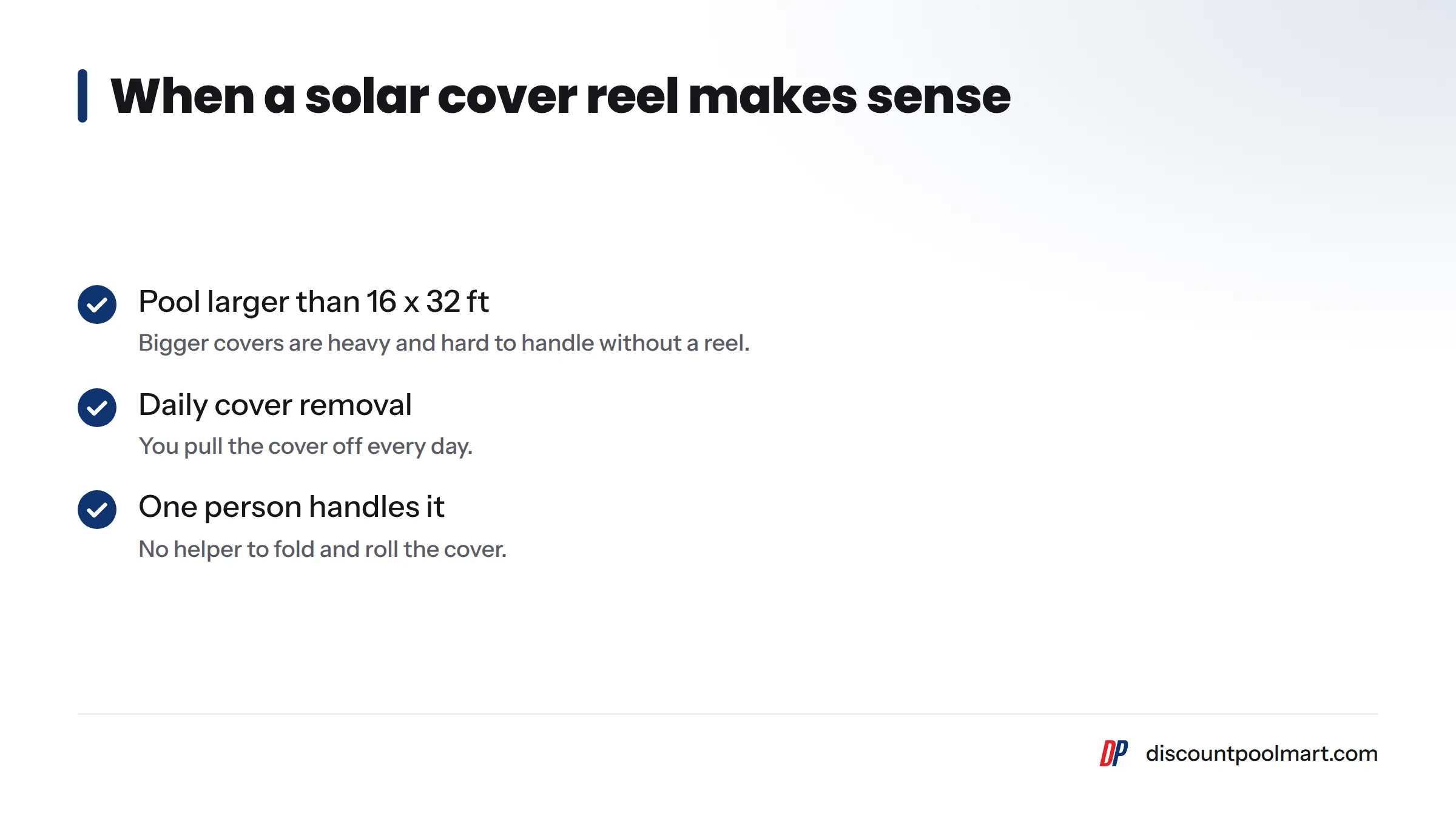
A reel makes sense if your pool is larger than about 16 x 32 ft, if you pull the cover off daily, or if one person handles it alone. The reel (also called a roller) keeps the cover off the deck so it doesn't get damaged by dragging. With a small pool and two people, a fold-and-roll method usually works fine.
If a physical cover isn't practical for you at all, some owners use a liquid solar blanket or floating solar sun rings instead.
Step 3: How to Trim a Solar Pool Cover to Your Pool Shape
If you're using this as a DIY pool solar cover guide, this is the step to slow down on. Let's break it down:
- Float the cover on the pool, bubble side down.
- Leave it in the sun for a day or two so it relaxes and flattens. New covers can shrink slightly at first.
- Push the cover snug against one wall and smooth it across the surface.
- Trim along the waterline with sharp scissors. Leave a little clearance so the edge rides slightly up the wall.
- On a kidney or freeform pool, trace the curves, steps, and corners. Fitting a solar cover for a freeform pool goes best in small cuts, because you can always remove more.
- Cut around the skimmers so water still flows freely.
Rather not do it yourself? Discount Pool Mart installs covers across the LA area.
Step 4: Put the Solar Pool Cover On and Take It Off Correctly
Putting it on
Unroll it from one end, bubble side down, then check for gaps along the walls and steps.
Taking it off
Take the cover off completely before anyone swims. Use a reel, or have two people fold it in sections and roll it up. Don't drag it across the deck, because concrete scrapes the bubbles.
When to leave it off
Leave the cover off for a while after shocking or any heavy chlorine dose. Concentrated chlorine trapped under the plastic wears it out faster. For dosing, follow our guide to balancing pool chemicals safely. Our article on cyanuric acid explains how sunlight affects chlorine.
Warning: A solar cover is not a safety cover. People and pets can slip under it, and it never replaces supervision. Our safety cover guide lists real barrier options.
Step 5: How to Store a Solar Pool Cover Out of the Sun
Most people skip this step, and it costs them. A cover rolled up on a sunny deck takes direct UV with no water underneath to keep it cool, so it breaks down faster.
UV-safe storage checklist:
- Rinse off debris and chemicals
- Let it dry fully before storing it long term
- Put a storage cover over the reel
- Or move it somewhere shaded, like a garage
- Fold or roll it loosely, without tension
- Keep it off hot concrete
- Keep pets and rodents away from it
| Do | Don't |
|---|---|
| Cover the reel when the blanket is off | Leave it rolled in full sun |
| Store dry and clean | Store it wet or folded tight |
| Keep it shaded | Set it on hot deck surfaces |
Solar Cover Lifespan Under Southern California Sun
Here's what we see in our stores: Southern California customers bring back worn covers sooner than owners in milder or cloudier climates say theirs wear out. The most common culprit is a cover that spent its off-hours on a sunny deck. Storage habits often affect solar cover lifespan as much as thickness does.
Signs your solar cover is wearing out
| Symptom | Likely cause | What to do |
|---|---|---|
| Brittle, flaking plastic | UV degradation | Replace soon; store shaded next time |
| Blue bits in the skimmer | Surface breakdown | Clean the basket, plan a replacement |
| Flat bubbles | Age, chemical exposure | Leave off after shocking |
| Tears at edges | Dragging, wind | Use a reel, check fit |
| Cover blows off | Loose fit or high wind | Trim snug, remove before wind events |
Habits that add years to a cover
Store it covered, time your shock treatments, use a reel, and rinse it regularly. Good water chemistry helps too. See preventing pool algae in Southern California.
Pool Solar Cover FAQ
How thick should my solar pool cover be? Thinner covers are easier to handle, and thicker ones last longer in strong sun. Mid to thick suits most LA pools.
What color is best for a pool cover? Clear warms the water the most. Blue is a good middle ground. Dark or silver-backed covers warm the least.
Should the bubbles go up or down on a solar pool cover? Down, against the water.
What is a solar pool cover and how does it work? It's a floating polyethylene bubble sheet. It blocks evaporation, insulates the water, and lets sunlight through.
Can I cut a solar cover to fit a freeform pool? Yes. Let it relax on the water first, then trim along the waterline with scissors.
Should I take the solar cover off after shocking? Yes. Leave it off for a while so the chlorine doesn't break down the plastic.
Is a solar cover a safety cover? No. Our pool safety cover guide covers barrier options.
Does a solar cover work alongside a pool heater? Yes. It helps hold the heat your heater adds. Our heater buying guide covers the equipment side.
Next steps: write down your pool's measurements and bring them to a Discount Pool Mart store. Our staff will help you pick the right size and thickness, and we can install the cover for you.