
Pool Heater Guide for LA Homeowners | Discount Pool Mart
This pool heater guide starts with the answer most LA owners want. There are three pool heater types: gas, heat pump, and solar. A solar pool cover then keeps that heat in the water. Gas warms a pool fast at any air temperature. A heat pump holds a steady temperature when the air is mild, and in Los Angeles the air stays mild for much of the year. Solar runs on sunshine and works best with a cover.
Maybe you've dipped a toe into a 66-degree pool on a sunny April afternoon and gone straight back inside. Lots of people have. That pool still costs money every month, and it sits unused for half the year. The fix is matching the heater to your yard, your weather, and the way you actually swim. Discount Pool Mart is an authorized Hayward and Jandy heater dealer serving LA pool owners. When customers at the counter ask where to start, this is the page we give them.
Which Pool Heater Fits Your LA Pool? The Short Answer
The right Southern California pool heater depends more on how you swim than on the equipment itself:
- Gas (natural gas or propane): weekend or occasional heating, warm water within hours, cool evenings.
- Heat pump: keeping the pool at one comfortable temperature through mild spring, fall, and winter days.
- Solar heating plus a solar cover: yards in full sun, and owners who want to extend swim season with little effort.
| Heater type | Heat source | Heats fastest when… | Best fit when… | Depends on |
|---|---|---|---|---|
| Gas heater | Burns natural gas or propane | Any air temperature | You heat on demand or for short stretches | Gas supply, BTU output |
| Heat pump | Moves heat from ambient air | Air is warm and humid | You hold one temperature for weeks | Air temperature, COP |
| Solar heating | Sunlight on solar collectors | Sunny, calm days | Your roof or yard gets strong sun | Sun exposure, collector area |
| Solar cover | Holds heat by blocking evaporation | Works with any heater | You want to keep heat overnight | Daily use of the cover |
Want a full side-by-side? Our page with pool heater types compared breaks down the purchase decision in more detail.
How Pool Heaters Work: Gas, Heat Pump, and Solar at a Glance
Every system runs the same loop. Pool water flows through the heater, picks up warmth, and goes back to the pool. What sets them apart is where the heat comes from.
Gas Heaters Burn Fuel to Heat Water
A gas pool heater burns natural gas or propane in a combustion chamber. Pool water passes through a heat exchanger above the flame, often made of cupro-nickel or copper, and comes out warmer. The U.S. Department of Energy notes that gas heaters suit pools heated for short periods because they raise the temperature quickly.
Heat Pumps Move Heat Out of the Air
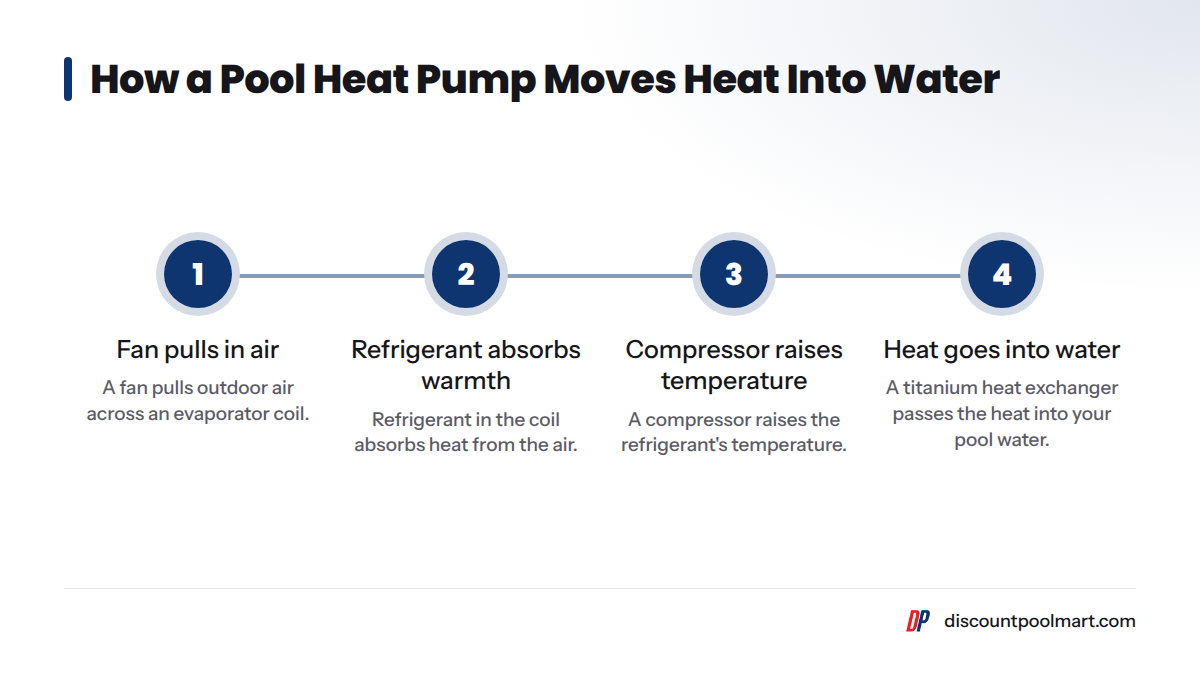
A pool heat pump doesn't make heat. It moves it. A fan pulls outdoor air across an evaporator coil, and refrigerant in the coil absorbs that warmth. A compressor raises the refrigerant's temperature, then a titanium heat exchanger passes the heat into your water. Electricity runs the fan and compressor, but the heat itself comes from the air.
Solar Collectors Warm Water With Sunlight
With solar pool heating, your pump sends water up to collectors, usually on a roof. Sunlight warms the water as it passes through, and it flows back down to the pool. The DOE's solar pool heater guidance explains that most systems use your existing pool pump to move the water.
Pool Heater BTU and Heat Pump COP: The Two Numbers on Every Spec Sheet
- BTU (British thermal unit): the heat needed to raise one pound of water by 1°F. A heater's BTU/hr rating tells you how much heat it puts out each hour.
- COP (coefficient of performance): how many units of heat a heat pump delivers for each unit of electricity it uses. The DOE reports typical heat pump COPs ranging from 3.0 to 7.0, measured under standard test conditions. For the engineering background, see this entry on the coefficient of performance.
Heating a Pool in Los Angeles Follows Different Rules
A lot of national heater advice assumes harsh winters. LA doesn't get them. Here is why that changes the math.
Mild Winters Keep Heat Pumps in Their Working Range
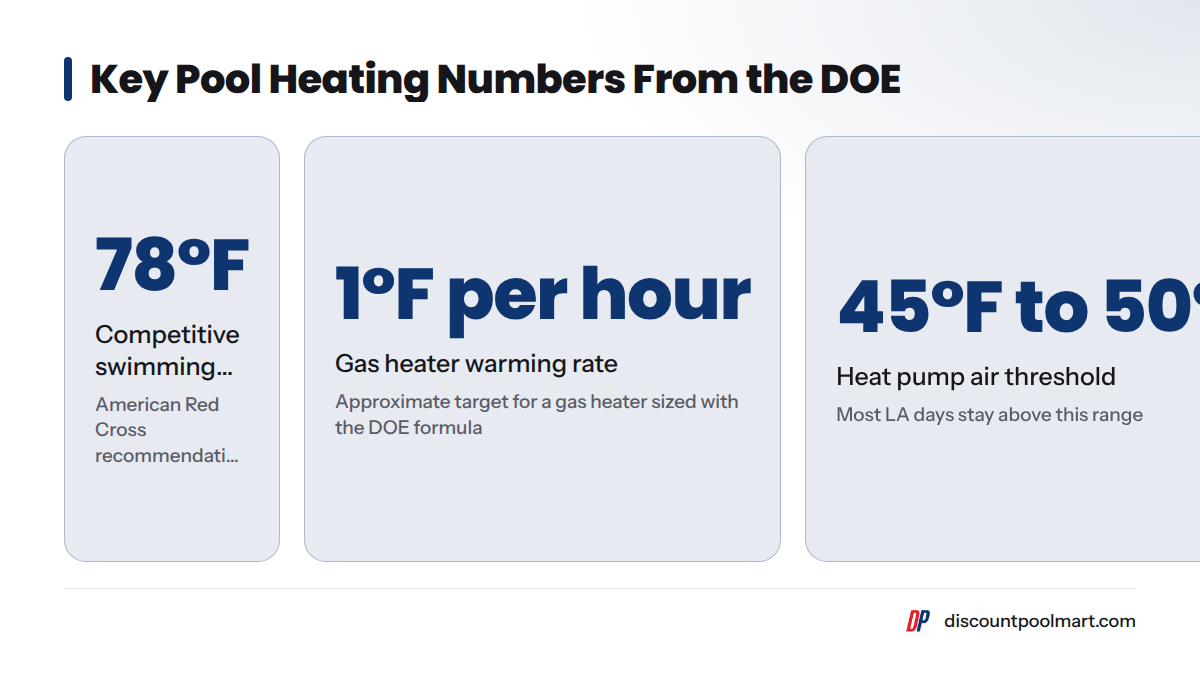
The DOE says most heat pumps run well as long as the outside air stays above the 45°F to 50°F range. Climate records from the National Weather Service Los Angeles office show daytime highs across most of the LA basin staying above that range for nearly the whole year. Cold inland nights still slow a heat pump down, so a coastal yard and a Valley yard won't behave the same way.
Sunshine Gives Solar a Head Start
Southern California's long stretches of sunny days give solar collectors and solar covers more working hours than they get in most of the country. A shaded yard erases that advantage, so check your sun exposure before anything else.
Electricity and Gas Rates Shape the Fuel Decision
California's average residential electricity price ranks among the highest in the continental U.S., according to U.S. Energy Information Administration state data. That hits heat pump owners, who pay Southern California Edison or LADWP for the power. Gas heaters run on SoCalGas service or propane. My advice: before you pick a fuel, compare your local rates with how often you really swim.
What we see at the counter: In our experience, LA owners who swim most days lean toward heat pumps. Weekend swimmers and families who heat for parties lean toward gas. Many owners with sunny yards start with a solar cover and add a heater later. These are our staff's observations, not survey data.
Gas Pool Heaters: Fast Heat When You Want It
Natural Gas or Propane
Both fuels heat water the same way. Natural gas arrives through a utility line. Propane comes from a tank on your property, which works for homes without a gas line. Either way, the heater has to be set up for the fuel you use.
Who Gas Suits in LA
Consider a weekend swimmer in the Valley. The pool sits cold all week and needs to be warm by Saturday afternoon. Gas handles that well. Add pool automation and you can start heating from your phone on Friday.
Hayward and Jandy Gas Heaters We Service
We sell and service gas heaters from Hayward and Jandy, so we can help whether you're shopping for a new Hayward pool heater or need work on a Jandy pool heater. In the LA basin, the South Coast AQMD limits nitrogen oxide emissions from small water heaters, pool heaters included, under Rule 1146.2. That rule is why the models sold here are low-NOx. A separate guide on how a pool gas heater operates is coming soon.
Pool Heat Pumps: Steady Warmth for SoCal's Mild Seasons
Built to Hold a Temperature, Not Rescue a Cold Pool
Heat pumps warm water slowly. They're at their best keeping a pool at the same temperature day after day. Warming a cold pool overnight isn't their job.
Heat Pump COP Rises and Falls With the Air
COP climbs in warm, humid air and drops as the air cools. A heat pump that runs easily through a Torrance September has to work harder on a January night in Santa Clarita.
Heat/Cool Units and Low-Ambient Models
Some models can run the cycle in reverse to cool the water during hot inland summers. Low-ambient models keep running in cooler air. A full pool heat pump guide is in the works.
Solar Pool Heating and Solar Pool Covers: Using LA Sunshine
Collectors Need Full Sun
Once they're installed, collectors warm water for free, but only while the sun is out. A full-sun backyard on the Westside is a much better fit than a shaded canyon lot.
A Solar Pool Cover Holds Heat for Any Heater
The DOE calls evaporation by far the largest source of energy loss in swimming pools. A solar cover blocks that loss. I'd call it the cheapest upgrade you can make, whether you heat with gas, a heat pump, or solar.
A solar cover is not a safety cover. It floats on the water and won't hold a child or pet. For covers built to protect, see our pool safety cover guide.
Pool Heater Maintenance Checklist
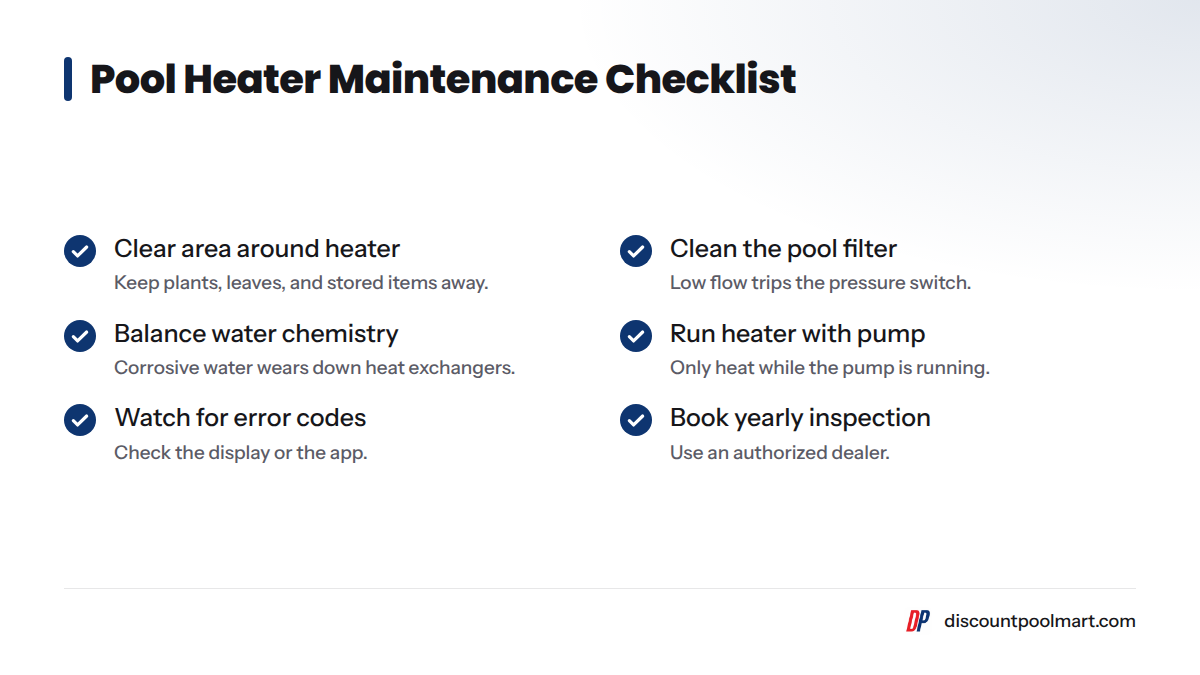
- Keep plants, leaves, and stored items clear of the heater.
- Clean your pool filter so water keeps moving. Low flow trips the pressure switch.
- Keep pool water chemistry balanced. Corrosive water wears down heat exchangers.
- Run the heater only while the pump runs. You can set those hours with pool pump scheduling.
- Watch the display for error codes, or check them with Hayward and Jandy app control.
- Rinse off solar collectors and covers.
- Book a yearly inspection with an authorized dealer.
Pool Heater Not Working? Five Safe Checks First
Let's break it down:
- Is the pump running, and is the filter clean? If the pump is dead, see our page on pool pump repair in Los Angeles.
- Does the heater have power, and is the gas supply on?
- Is the setpoint higher than the current water temperature?
- Does the display show an error code? Write it down.
- Is the heater set to the right mode on your automation system?
Stop and call a pro: If you smell gas, or you see burner, igniter, or refrigerant faults, leave it to authorized service. Do not attempt repairs.
A full troubleshooting guide for pool heaters that won't run is coming soon.
More Pool Heater Guide Topics
- Gas vs. heat pump vs. solar, side by side
- Pool gas heater operation (coming soon)
- Pool heat pump guide (coming soon)
- Pool heater troubleshooting (coming soon)
Next steps: Talk to an authorized Hayward and Jandy dealer. Stop by a Discount Pool Mart store in the LA area, or request heater installation or repair service. We'll size your heater to your actual pool instead of guessing.
Pool Heater FAQ
How many BTUs do I need to heat a 10,000-gallon pool?
Surface area matters here, not gallons. The DOE's formula is pool area × temperature rise × 12, which assumes a 1°F to 1.25°F rise per hour and light wind. Wind and cover use both change the answer, so have a dealer size it.
What should my pool heater be set to?
The DOE cites the American Red Cross recommendation of 78°F for competitive swimming. A lower setpoint combined with a cover means less heat loss.
How long does it take to heat a pool from 60 to 80 degrees?
Gas is fastest. A gas heater sized with the DOE formula aims for about 1°F per hour, so a 20-degree rise takes most of a day. Heat pumps take longer, especially in cool air.
What size heater is appropriate for a 20,000-gallon pool?
The same factors apply: surface area, how much of a rise you want, wind, and whether you use a cover. Start with the DOE formula, then confirm the size with us.
Can I use a heat pump in an LA winter?
Usually, yes. Most LA days stay above the 45°F to 50°F range the DOE cites, though cold nights cut output.
Does a solar cover really keep my pool warmer?
Yes. It blocks evaporation, which the DOE names as the biggest source of pool heat loss.