


A pool heat pump doesn't make heat. It uses electricity to pull warmth out of the surrounding air and move it into your pool water through a refrigerant cycle, so it works best when the air is warm. In Southern California's mild winters, that comes down to three habits: keep a steady comfort set point, run the unit during the warmest daytime hours, and use a cover to hold the heat in.
A slow new unit, or water that felt colder than you expected on a January morning, usually doesn't mean the heater is broken. It usually means the routine needs work. This pool heat pump guide follows the same four-step plan our counter staff at Discount Pool Mart walk LA owners through every week:
- Set your target water temperature.
- Schedule run times around the warmest hours.
- Adjust settings by season.
- Hold heat in with a cover and good circulation.
If you'd like to compare gas, solar, and electric options first, start with our pool heater guide for LA.
How Does a Pool Heat Pump Work? It Pulls Heat From the Air
Think of an air conditioner running in reverse. A fan draws outdoor air across a coil filled with cold refrigerant. The refrigerant absorbs warmth from that air, a compressor concentrates it, and a heat exchanger passes the heat into your pool water. Then the cycle starts again.
The Refrigerant Cycle in Four Stages
Engineers call this process vapor-compression refrigeration. Let's break it down. The steps below work as a pool heat pump diagram in words, following the refrigerant around the cabinet:
- Evaporator coil: The fan pulls ambient air across the coil. Cold liquid refrigerant soaks up heat from that air and turns into a gas.
- Compressor: The compressor squeezes the gas, which pushes its pressure and temperature well above your pool water's.
- Condenser / heat exchanger: Pool water flows through a heat exchanger. Many manufacturers build it from titanium so it holds up to pool chemistry. The hot refrigerant gives its heat to the water and condenses back into a liquid.
- Expansion valve: The liquid passes through a valve that drops its pressure and temperature, so it's ready to absorb heat again at the evaporator.
A Heat Pump Moves Heat Instead of Making It
Nothing burns inside a heat pump, and no resistance element glows. The U.S. Department of Energy explains that heat pump pool heaters use electricity to capture heat and move it from one place to another. The electricity only runs the compressor and the fan. That's why a heat pump can deliver several units of heat for every unit of electricity it uses.
What the BTU Rating Tells You
BTU output (British thermal units per hour) measures how much heat the unit can push into the water each hour. For any given pool, more output means the temperature climbs faster. Output also changes with air temperature, so the label number reflects set rating conditions, not every day in your backyard. Sizing is a separate decision, and our comparison of pool heater types walks through it.
Pool Heat Pump COP: Air Temperature Sets the Pace
Coefficient of performance (COP) is the ratio of heat delivered to electricity used. A COP of 5 means the unit moves five units of heat into the water for every unit of electricity it consumes. Of all the numbers on the spec sheet, pool heat pump COP tells you most directly how much heat your power bill buys.
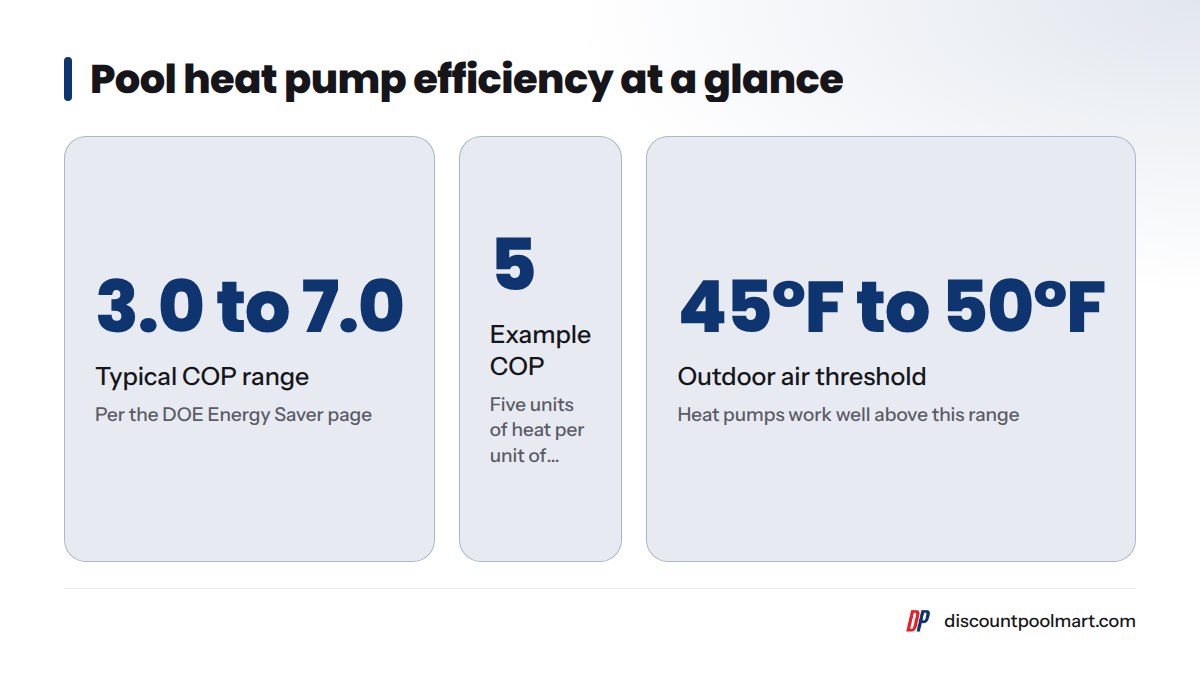
Cited figure: The DOE Energy Saver page on heat pump pool heaters says COPs usually range from 3.0 to 7.0. It also notes that heat pumps work well as long as the outside temperature stays above the 45°F to 50°F range. Check your owner's manual for your model's exact operating limits.
Cooler Air Means Slower Heating
Warm air holds more heat for the evaporator coil to collect. As the air cools, the refrigerant picks up less heat on each pass, and the compressor works harder for every degree it adds. The unit keeps running. The heat just arrives more slowly. In my view, this one bit of physics explains most of the "my heater is slow" questions we get in December.
Pool Heat Pump Defrost Mode Is Normal
On cold, humid mornings, frost can form on the evaporator coil. Defrost mode pauses heating until the frost melts, then heating picks up again. You may see water dripping or hear the fan change pitch. That's expected, not a fault.
Why a Heat Pump Pool Heater Fits Los Angeles Weather
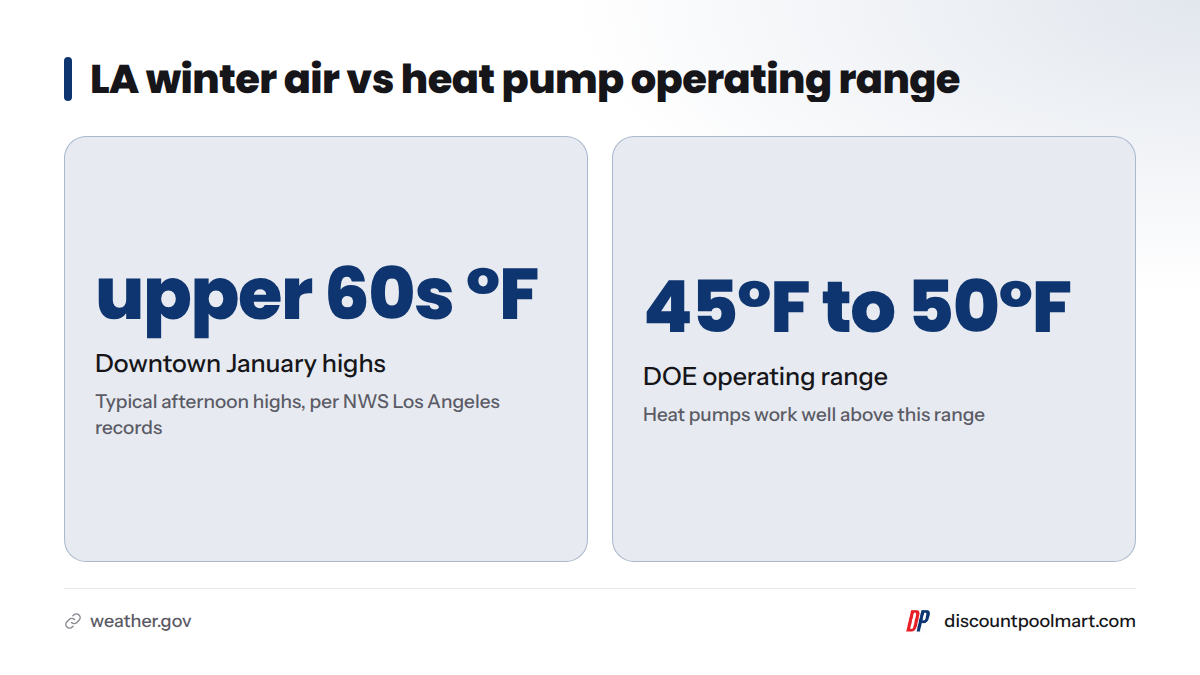
Here is why LA owners have it good. If you're thinking about a heat pump pool heater, Los Angeles weather works in your favor. Records from the National Weather Service Los Angeles office show downtown January afternoon highs typically in the upper 60s °F, and hard freezes in the basin are rare. Those midday temperatures sit comfortably above the DOE's 45°F to 50°F range.
Microclimates still change the picture:
- Coastal areas stay mild but often turn damp and gray, so expect more defrost cycles on winter mornings.
- The San Fernando and San Gabriel valleys get warmer days and colder nights. Midday runs pay off most here.
- Inland and foothill areas see the biggest swings between day and night, plus the occasional frosty dawn.
Take a typical valley home with a covered pool. In our experience, owners with that setup who run the heater from late morning to midafternoon keep the water comfortable through most of the winter. Owners who run it overnight end up heating with the coldest air of the day.
Step 1: Choose Your Pool Heat Pump Temperature Setting
Pick a comfort set point and leave it alone. Many families settle in the low 80s °F for recreational swimming, but your household's preference is what counts.
- Keep it steady. Big daily swings force long recovery runs during cooler hours.
- For occasional use, raise the set point a day or two ahead instead of expecting quick heat.
- Read your manual. Set point ranges and controls differ across Pentair UltraTemp, Hayward HeatPro, and Jandy units.
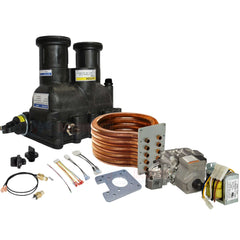
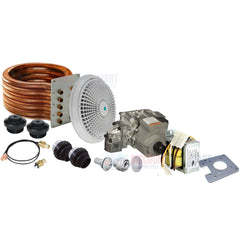
If your display bezel has failed, we stock parts like the Pentair UltraTemp control board assembly. Jandy owners can pick up a replacement temperature sensor kit.
Step 2: The Best Time to Run a Pool Heat Pump Is Midday
The best time to run a pool heat pump is late morning through the afternoon, when the air is warmest and COP is highest. One rule catches a lot of people: the heat pump only heats while the pool pump circulates water. No flow, no heat.
Sync the two with your timer or controller. Our guide to pool pump scheduling shows how to set run windows, and the pool automation guide covers controllers that run both pieces of equipment together. You can even control your heater from an app.
Scheduling checklist:
- Pump timer runs through the warmest midday hours
- Heater enabled during that same window
- Flow confirmed (no flow errors on the display)
- Longer windows planned for winter and the first heat-up
Step 3: Adjust Pool Heat Pump Settings by Season
Next steps: match your routine to the calendar. Pool heat pump winter use in Southern California looks quite different from summer, when you may not need the heater at all.
| Season | Typical LA conditions | Set point approach | Run window | Cover use |
|---|---|---|---|---|
| Summer | Hot days, warm nights | Minimal or no heating needed | Short or off | Cover to limit evaporation |
| Fall | Warm days, cooling nights | Hold your comfort target to extend the swim season | Midday blocks | Cover nightly |
| Winter | Mild days, chilly mornings | Lower the target or pause during rare cold snaps | Shorter, centered on midday; expect defrost at dawn | Cover whenever not swimming |
| Spring | Warming days, cool nights | Gradual early-season heat-up | Long midday blocks | Cover always |
First heat-up of the season: Expect a gradual rise over several days, not hours. Keep the cover on, run long midday blocks, and let the pump circulate without interruptions.
Step 4: Hold Heat In With a Cover and Good Circulation
A Solar Cover Does the Most Work
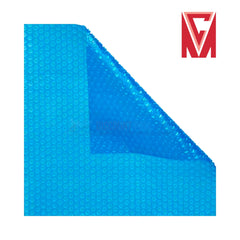
The DOE's guidance on swimming pool covers says evaporation is by far the largest source of energy loss in pools, and that covering a pool when it isn't in use is the single most effective way to cut heating needs. The agency estimates savings of 50% to 70% are possible, though results vary by pool. Our pool cover guide explains the different types.
Keep Water and Air Moving
A dirty filter slows flow, and slower flow means less heat reaches the water. Clean your pool filter on schedule. Keep leaves, lint, and plants off the evaporator coil, and leave open space around the cabinet so air can move freely.
Watch Wind and Shade
Wind speeds up evaporation across the water's surface, so a fence or hedge can help. Shade over the unit itself can backfire, since it may mean cooler intake air.
Heat retention checklist:
- Cover on whenever the pool isn't in use
- Filter clean, pressure normal
- Coil and surrounding area clear
- Windbreak where practical
What We're Seeing at Discount Pool Mart: LA Owners Moving From Gas to Heat Pumps
I'll share what our in-store sales show. Across our LA counters, more owners are replacing gas heaters with heat pumps. Customers tell us they want steady background warmth instead of quick bursts, prefer all-electric equipment, and like stretching the swim season without much fuss. Those are their reasons, not promises. Every pool behaves a little differently.
Still running gas? See our pool gas heater operation guide. Thinking about switching? Read our gas vs heat pump vs solar comparison. Costs get their own pricing guide.
For model-specific setup help or heat pump parts, stop by a Discount Pool Mart store. Bring your model number and we'll walk you through it.
Pool Heat Pump FAQ
These are the questions LA owners ask us most often.
Does a pool heat pump work in winter in Los Angeles?
Yes, with a few conditions. LA's mild winter days usually stay above the 45°F to 50°F range the DOE cites. Run it midday and keep the pool covered.
What temperature should I set my pool heat pump to?
Pick a steady comfort target, often in the low 80s °F for recreational swimming. Check your manual for your model's range.
Is it better to run a pool heat pump during the day or at night?
During the day. Warmer air raises COP, so the same electricity moves more heat.
How long does a pool heat pump take to heat a pool?
That depends on BTU output, pool volume, air temperature, and whether you use a cover. Plan on days for a full seasonal heat-up, not hours.
What are the downsides of a pool heat pump?
It heats gradually, puts out less in cold air, pauses now and then to defrost, and needs open airflow around the unit.
What is defrost mode on a pool heat pump?
It's a built-in cycle that pauses heating to melt frost off the evaporator coil on cold, humid mornings. It's normal.
Do I need to run the pool pump for the heat pump to work?
Yes. The heat pump can only heat when water flows through its heat exchanger.
Can I use a heat pump on an above-ground pool?
Usually, yes. The short version of any above ground pool heat pump guide: check the manufacturer's specs for flow and plumbing requirements before you install.
Written by the Discount Pool Mart pool equipment team. Updated October 2026.