
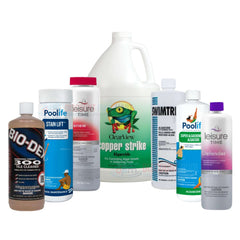
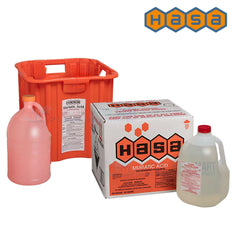
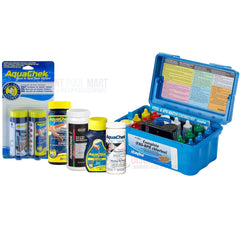
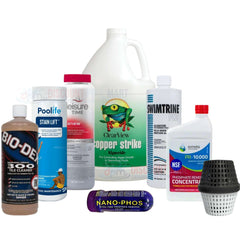








Above ground pool maintenance is a short weekly routine, not a second job. Skim and brush. Walk around the vinyl liner and look for wear. Rinse the cartridge filter or backwash the sand filter. Test the water and dose chemicals for your smaller volume. Check for heat damage. Then set up a mild SoCal off-season. A printable checklist sits at the bottom of this guide.
That's the whole job, and most weeks it takes 15 to 20 minutes. Every summer we hear some version of the same worry at our counters: "I bought the pool, filled it, and now I have no idea what I'm supposed to do." If you want to know how to maintain an above ground pool, this guide takes it one step at a time. The team at Discount Pool Mart wrote it for people who own above ground pools. In-ground pools need different advice.
Why Above Ground Pools Need Their Own Routine in LA
Most pool care advice online assumes a plaster or pebble in-ground pool. Above ground pools differ from that in three ways.
A vinyl liner needs softer tools and steadier chemistry
Your liner is a sheet of polyvinyl chloride stretched over a frame. A steel brush that scrubs plaster clean can tear it. Water that drifts out of balance can also fade, wrinkle, or stiffen the vinyl over time.
Fewer gallons means smaller, more frequent doses
A typical above ground pool holds a fraction of the water in a backyard in-ground pool. With less water, each dose changes the chemistry faster, so it's easy to overdose. Swimmers, sun, and debris also use up sanitizer quickly. Adding smaller amounts more often keeps your readings steady.
Exposed walls and the top rail take the afternoon sun
Soil insulates an in-ground pool. The wall and top rail of an above ground pool sit in full sun all afternoon. The U.S. EPA notes on its UV Index page that UV is strongest around midday in summer. That same UV breaks down vinyl and burns off unstabilized chlorine.
| Factor | Above ground pool | In-ground pool |
|---|---|---|
| Surface | Vinyl liner | Usually plaster, pebble, or tile |
| Brush type | Soft-bristle only | Often stainless or combo bristles |
| Filter type | Usually cartridge or sand | Cartridge, sand, or DE |
| Dose size | Small, frequent | Larger |
| Heat exposure | Walls and top rail exposed | Mostly shielded by ground |
| Off-season | Cover, reduced circulation | Varies by equipment |
From our LA stores: Above ground owners ask for different things than other customers. They mostly want test strips, replacement filter cartridges, chlorine floaters, soft brushes, and covers. Heaters and automation rarely come up. They want clear water from simple equipment, and that's what this guide covers.
Step 1: Weekly Above Ground Pool Cleaning Starts at the Surface
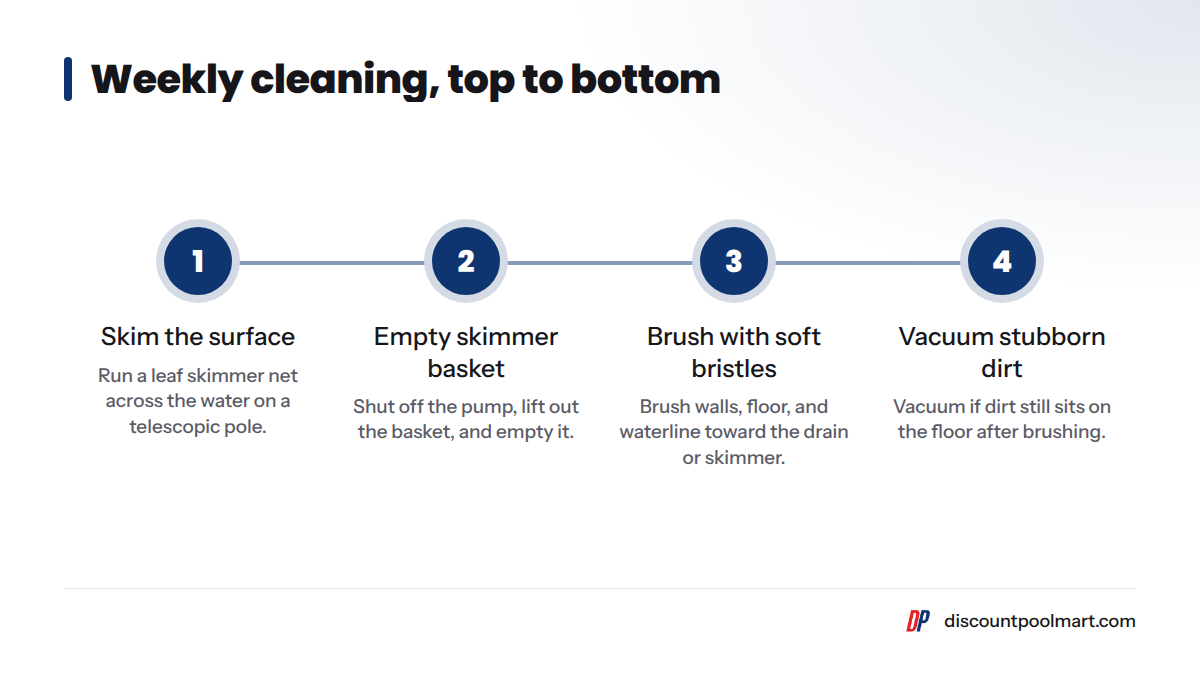
Start at the top and work down. Here is why: anything you brush loose needs a clean skimmer to catch it.
Skim, then empty the skimmer basket
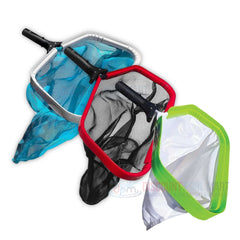
Run a leaf skimmer net across the surface on a telescopic pole. Then shut off the pump, lift out the skimmer basket, and empty it. A packed basket chokes circulation and makes the pump work harder. If your pole keeps collapsing, our roundup of the best pool poles can help you pick a sturdier one.
Brush with soft bristles only
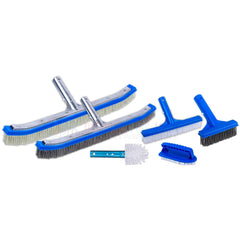
Use a nylon, soft-bristle pool brush on the walls, floor, and waterline. Wire brushes and abrasive pads should never touch vinyl. Brush toward the drain or skimmer so debris settles where you can catch it. Spend a little more time on the corners and around the ladder, because algae likes spots with weak water flow.
Vacuum when dirt won't budge
If dirt is still sitting on the floor after brushing, it's time to vacuum. Our guide on how to vacuum a pool walks through the full process. To see how vacuuming fits with everything else, read our 5-step pool cleaning routine.
LA callout: After a Santa Ana wind event, check the skimmer basket every day for a few days. Dry leaves and dust pile up fast.
Step 2: Above Ground Pool Liner Care
I think this is the step most owners skip and later regret. A liner rarely fails all at once. It gives you warning signs first.
What to look for
- Fading: pale bands, often at the waterline on the sunny side.
- Wrinkles: folds on the floor or lower wall.
- Small punctures: pinholes near the ladder or steps.
- Waterline residue: a greasy ring from sunscreen and body oils.
Cleaning the waterline
Wipe the scum line with a cleaner labeled safe for vinyl liners, and follow the label directions. Household cleaners can foam, throw off your water balance, or damage the vinyl.
Keep the water level in range
Your manufacturer's manual lists the skimmer's operating range, so keep the water level inside it. If the water runs too low, the pump can pull in air. If it runs too high, the skimmer stops skimming.
2-minute liner walk-around:
- Walk the full perimeter in daylight.
- Look at the waterline for fading or residue.
- Look down at the floor for new wrinkles.
- Check the ladder area for scuffs.
- Note anything new and compare it next week.
Step 3: Above Ground Pool Filter Cleaning
The filter catches what the brush and skimmer miss. Equipment makers such as Hayward and Pentair publish cleaning intervals for each model, so keep your manual handy.
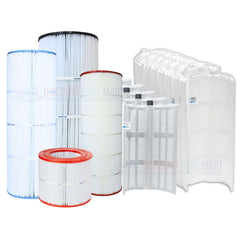
Cartridge filters: rinse often, deep clean now and then
- Turn off the pump.
- Release pressure with the air relief valve.
- Remove the cartridge.
- Hose it off from top to bottom, working between the pleats.
- Put it back and restart the pump.
When rinsing no longer brings the pressure back down, deep-clean the cartridge with a dedicated filter cleaner.
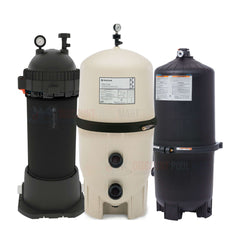
Sand filters: when and how to backwash
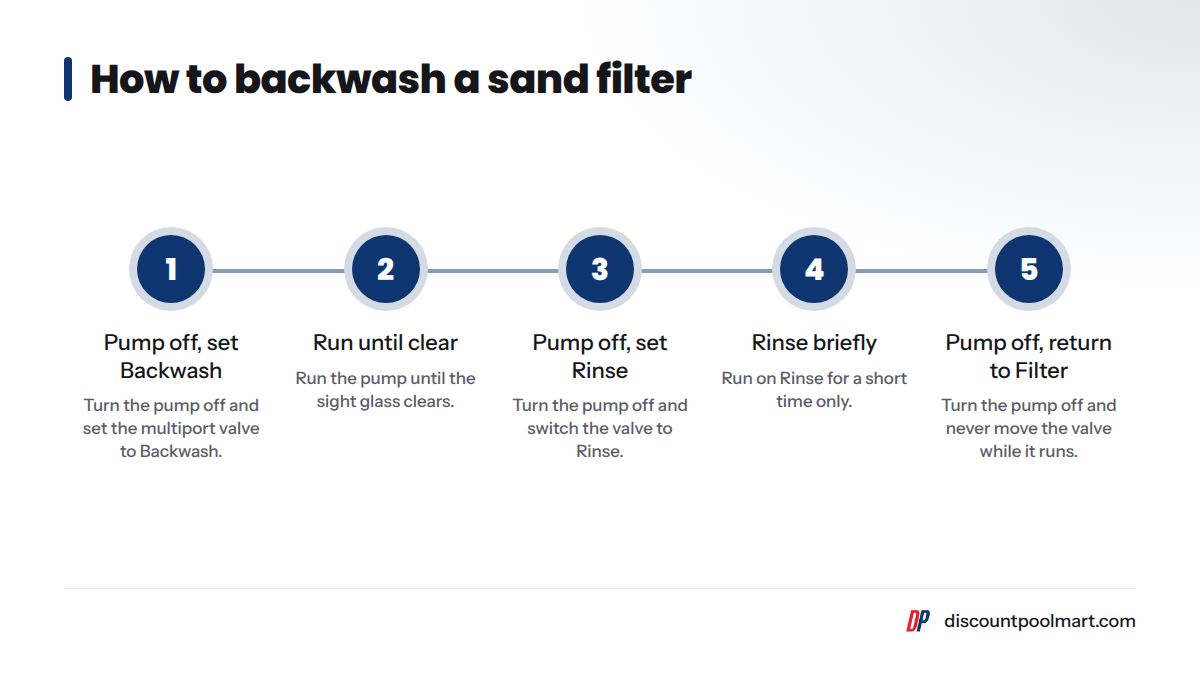
Backwash means running water backward through the sand to flush trapped dirt out the waste line. The usual sequence goes like this: pump off, set the multiport valve to Backwash, run until the sight glass clears, pump off, switch to Rinse briefly, pump off, then return to Filter. Always follow your manufacturer's manual. Never move the valve while the pump is running.
Let the pressure gauge tell you when
Write down the gauge reading right after you clean the filter. That's your baseline. When pressure climbs well above it, clean the filter again. Your manual tells you exactly how much of a rise to watch for.
| Filter | Routine task | Signal to clean | Common mistake |
|---|---|---|---|
| Cartridge | Hose rinse, periodic soak | Pressure rises above baseline | Pressure washer that shreds pleats |
| Sand | Backwash and rinse | Pressure rises above baseline | Backwashing too often, which can hurt filtering |
Can I use Dawn dish soap? We don't recommend it. Soap residue can foam in the pool and coat the filter media. Use a cleaner made for pool filters and follow the manufacturer's directions. Our guide on how to clean a pool filter covers each filter type.
Step 4: Dose Above Ground Pool Chemicals for a Smaller Water Volume
Let's break it down. You can't dose correctly until you know how many gallons your pool holds.
Find your water volume in gallons
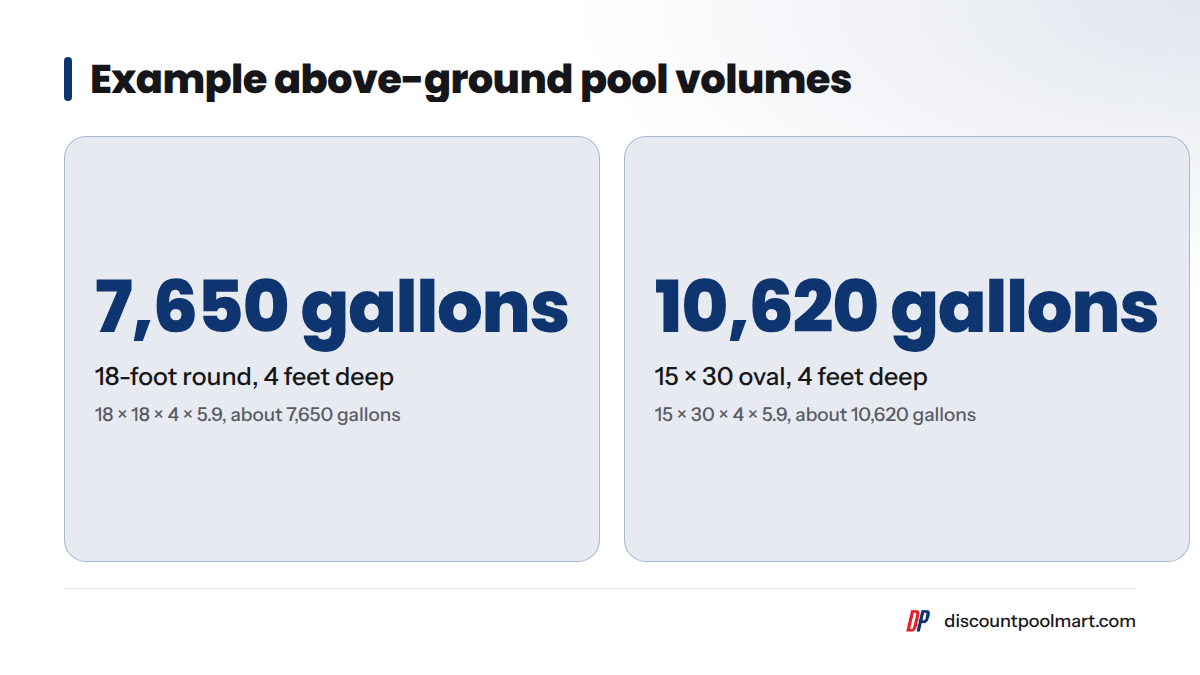
- Round: diameter × diameter × average depth × 5.9
- Oval: length × width × average depth × 5.9
Worked example: An 18-foot round pool with water 4 feet deep holds 18 × 18 × 4 × 5.9 = about 7,650 gallons. A 15 × 30 oval at 4 feet holds 15 × 30 × 4 × 5.9 = about 10,620 gallons. Write your number on the inside of your chemical cabinet door so you see it every time you dose.
Test with test strips before you add anything
Test before every dose. Test strips are fast and cheap, and our guide on how to test pool water compares them with drop kits and digital readers. The CDC Healthy Swimming program recommends checking chlorine and pH regularly, because those readings show whether germs are under control.
Chlorine for above ground pool water: using a floater safely
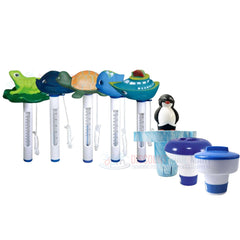
A chlorine floater is a vented dispenser that slowly dissolves chlorine tablets. Let it float freely, away from the skimmer, and don't let it rest against the liner. Concentrated chlorine sitting on vinyl can bleach a spot. Take the floater out while people are swimming.
Pool water balance in plain terms
Pool water balance means keeping pH, total alkalinity, calcium, and stabilizer within ranges where chlorine works and surfaces stay protected. Stabilizer (cyanuric acid) shields chlorine from the sun, and under LA sun that matters a lot. Our explainer on cyanuric acid covers how it works, and our pool water chemistry guide lists target ranges. Keeping sanitizer steady also helps you prevent pool algae in Southern California.
Warning: Never mix chemicals. Add one product at a time and follow the label. The U.S. EPA regulates pool sanitizers as pesticides, and its pesticide label guidance explains why label directions carry legal weight. Our guide to balancing pool chemicals safely covers safe handling.
Step 5: Spot Heat Damage and Liner Wear Early
Signs of UV and heat exposure
- Fading at the waterline → check stabilizer and chlorine levels, and add shade or use a cover more often.
- Brittleness (the vinyl feels stiff) → bring a water sample to the store.
- Stretching or new wrinkles → rebalance the water, then ask us to take a look.
- Pinholes → patch with a vinyl repair kit, following its instructions.
Top rail and pool wall checks
Look over the top rail for warping or loose covers. Check the pool wall for rust spots or bulges. This is only a visual check. If something looks structural, call a professional.
What our LA staff see
Our staff notice the same thing again and again: on pools with full afternoon sun and little shade, liners usually fade first along the waterline facing the sun. One customer brought in photos of a pale band on just the west side of her pool. A floater parked in one corner had been pushing her chlorine high. Once she moved the floater and added stabilizer, the fading slowed.
Step 6: How to Winterize an Above Ground Pool in Southern California
Why SoCal closing looks different
Guides written for snowy states tell you to drain the lines and blow out the plumbing. Hard freezes are uncommon across most of the LA basin, so many owners keep their pools running all winter.
Keep circulation and sanitizer going, just less
Run the pump for shorter periods and test less often, but don't stop altogether. Follow your equipment manual. Cloudy water after rain is common, and our article on why pool water turns cloudy explains how to clear it.
Use a winter cover
A winter cover keeps out leaves and UV. Our pool cover guide explains the different types and how to size one.
Store ladders and accessories
Rinse off ladders, floaters, and toys, then store them out of the sun. The CPSC Pool Safely campaign also advises removing ladders from above ground pools when nobody is swimming.
Your Weekly Above Ground Pool Maintenance Checklist
Print this above ground pool maintenance checklist and tape it near your equipment:
- Skim the surface
- Empty the skimmer basket
- Brush walls, floor, and waterline
- Do the 2-minute liner walk-around
- Check the filter pressure gauge
- Test with test strips
- Adjust or dose, one product at a time
- Check the chlorine floater
- Look over the top rail and pool wall
For a whole-house version, see our Los Angeles pool maintenance checklist.
Next steps: Stop by a Discount Pool Mart store for test strips, soft-bristle brushes, cartridges, floaters, and winter covers, all at everyday low prices. You can also bring in a water sample or book a service visit.
Above Ground Pool Maintenance FAQ
Do I need chlorine for above ground pool water? Yes. Every pool needs a sanitizer, and chlorine is the most common choice. A saltwater chlorinator makes chlorine for you.
Are above ground pools easier to maintain? In my experience, mostly yes. Less water and simpler equipment make cleaning faster. The catch is that small volumes swing quickly, so test often.
Can I use Dawn dish soap to clean my pool filter? No. Use a dedicated pool filter cleaner.
What does a typical pool service include? Usually skimming, brushing, emptying baskets, testing, dosing, and checking the filter.
How often should I clean my above ground pool filter? Clean it when the pressure gauge rises above your clean baseline, or as your manual directs.
How do I clean an above ground pool without draining it? Skim, brush, vacuum, and balance the water. That covers how to clean above ground pool without draining. You'll rarely need to drain it, and draining can stress the liner.
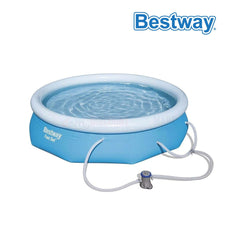
Does this routine work for Intex and other soft-sided pools? Mostly. Intex above ground pool maintenance follows the same steps, and so does care for Intex and Bestway frame pools in general. Check their manuals for filter and pump details.
How do I protect my liner from the LA sun? Keep stabilizer and chlorine in range, cover the pool when nobody is using it, add shade where you can, and keep floaters off the vinyl.