
Pool Cleaning Guide | Discount Pool Mart LA
A pool cleaning routine comes down to five jobs: skim the surface, brush the walls, steps, and tile, vacuum what settles, empty the baskets and clean the filter, then deal with anything that looks wrong, such as cloudy water or algae. Discount Pool Mart built the order and schedule below over 40 years of working on Southern California pools.
I'll be straight with you. Most new owners do these jobs out of order, or skip the baskets entirely, then wonder why the water looks tired by Friday. Here is how to make your Saturday routine shorter and more effective. Think of it as a step by step pool cleaning plan and a beginners guide to pool cleaning in one.
Our track record: 40 years of Southern California pool cleaning protocol, from a local Los Angeles pool supply retailer.
The Pool Cleaning Routine in Five Jobs, in Order
Picture a funnel. You lift the big debris first, loosen the stuck material next, collect what sinks, then clear the places where everything ends up. Skip a step and the extra work lands on the filter.
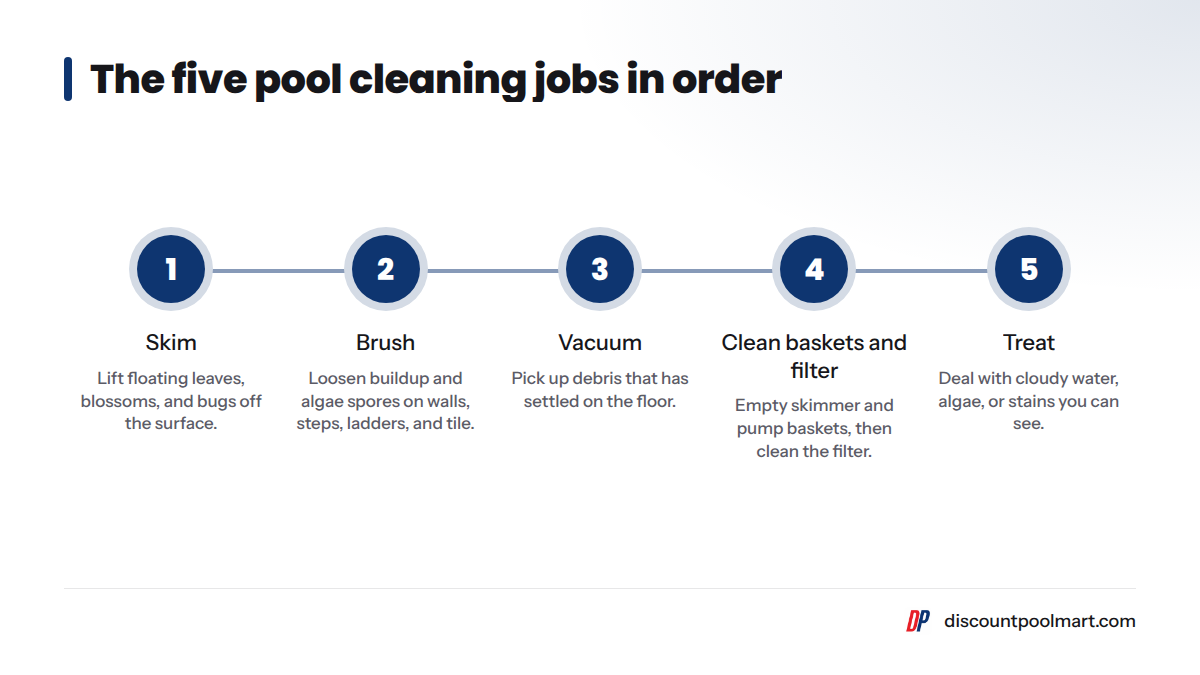
Your pool maintenance checklist
- Skim floating leaves, blossoms, and bugs off the surface.
- Brush walls, steps, ladders, and waterline tile to loosen buildup and algae spores.
- Vacuum the debris that has settled on the floor.
- Clean the skimmer baskets, the pump basket, and the filter.
- Treat anything you can see: cloudy water, algae, or stains.
The order has a reason behind each step. Skimming first keeps debris from sinking and breaking apart. Brushing second throws fine particles into the water, where the pump can catch them. Vacuuming third picks up what the brush knocked loose. Baskets and filter come last because they hold everything you just collected.
Pool cleaning tools you need
| Task | Tool | What to know |
|---|---|---|
| Skimming | Flat skimmer net or deep leaf net | Leaf nets handle heavy debris; flat nets are better for fine surface material |
| Brushing | Pool brush (nylon or stainless steel) | Match the brush to your surface |
| Vacuuming | Manual vacuum head and hose, or an automatic or robotic cleaner | See the comparison below |
| Reaching | Telescoping pool pole | One pole fits every attachment; read our guide to the best pool poles for cleaning |
| Baskets and filter | Gloves, hose, filter cleaner | Check your filter type first |
Skimming Keeps Leaves From Sinking, Staining, and Feeding Algae
Skimming takes a few minutes and is the fastest win in pool care.
Use a flat skimmer net for blossoms, bugs, and light surface litter. Switch to a deep leaf net when heavy debris is floating. Work with the wind and push debris toward the skimmer or a corner. In our experience, owners who skim daily during heavy drop seasons spend far less time vacuuming later.
Brushing Walls, Steps, and Tile
Algae spores and dirt cling to a thin film on pool surfaces, and brushing breaks it up. Brush the walls, steps, ladders, and waterline tile, working from the shallow end toward the main drain.
Nylon or stainless steel: pick by surface
| Surface | Common brush choice | Why |
|---|---|---|
| Vinyl or fiberglass | Nylon | Soft bristles will not scratch the finish |
| Concrete or plaster (gunite) | Stainless steel or nylon | Stainless is typically used on rough concrete; nylon is gentler on plaster |
This is general guidance. Confirm your surface type before you buy, because a steel brush on the wrong finish can cause damage you cannot undo.
Vacuuming Picks Up What Skimming Missed
You have three routes, and each suits a different owner.
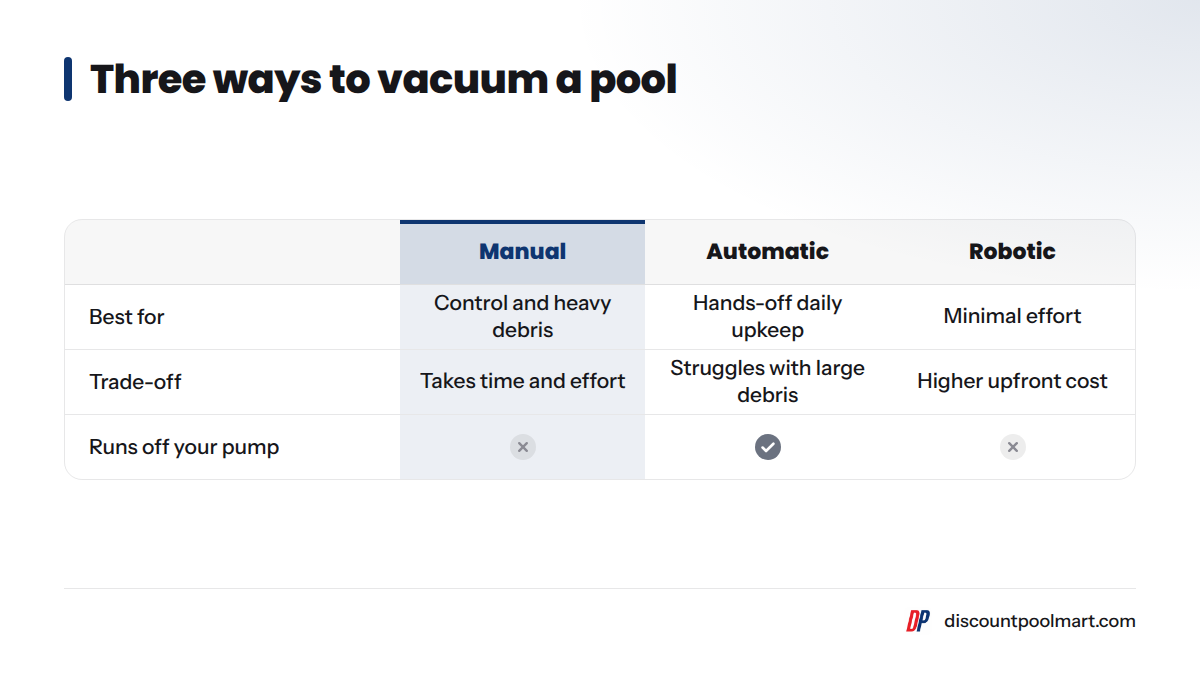
| Method | Best for | Trade-off |
|---|---|---|
| Manual vacuum | Full control, spot cleaning, heavy debris | Takes your time and effort |
| Automatic (suction-side or pressure-side) | Daily upkeep on a hands-off budget | Runs off your pump and can struggle with large debris |
| Robotic cleaner | Owners who want the pool cleaned with minimal effort | Higher upfront cost; has its own filter bag to empty |
Start with a manual vacuum. The head matters more than most people expect, so read choosing a pool vacuum head before you shop. Our rule of thumb: if you catch yourself vacuuming more than twice a week, look at an automatic or robotic cleaner.
Baskets and Filter: Where Circulation Gets Won or Lost
Water only cleans itself if it moves. Full baskets and a loaded filter choke circulation, and weak circulation invites algae.
Skimmer and pump baskets
The skimmer basket catches debris before it reaches the pump. The pump basket catches what slips through. Empty both whenever you skim, and check them after any windy day. A clogged basket starves the pump, and that repair bill is easy to avoid.
Cartridge, sand, and DE filters
| Filter type | Typical cleaning method |
|---|---|
| Cartridge | Remove and rinse the cartridge with a hose |
| Sand | Backwash, which reverses flow to flush trapped debris |
| DE (diatomaceous earth) | Backwash, then recharge with fresh DE |
Cleaning intervals vary by model, so check your manufacturer's manual. For the full walkthrough, read how to clean a pool filter. If the filter seems to be failing even when clean, see common pool filter problems. Pump or wiring trouble calls for equipment guides and a professional, not a cleaning routine.
Cloudy Water, Algae, and Stains Need Their Own Fixes
Cleaning cannot solve everything. When the water itself looks wrong, match what you see to the right guide.
| What you see | Likely category | Where to go |
|---|---|---|
| Hazy, milky water | Cloudy water | Why is my pool water cloudy |
| Green water or slimy walls | Algae | Prevent pool algae in Southern California |
| Yellow or mustard dust | Algae | Same algae guide |
| Black spots in plaster | Algae | Same algae guide |
| Brown, rust, or dark patches | Stains | Ask us in store with a photo |
Cloudy water
Cloudy water usually traces back to the filter, circulation, or water balance. Start with the cloudy water guide above, then confirm your numbers with how to test pool water.
Algae: green, yellow, and black
Green algae spreads fast, yellow clings to shaded walls, and black embeds in rough surfaces. Brushing is part of every fix, and prevention beats treatment every time.
Stains
Stains come from metals, organic matter such as leaves, or minerals. Identify the cause before you scrub, because the wrong treatment can set a stain. Bring us a photo and your pool surface type, and we will point you to the right product.
Balancing and dosing sit outside this routine. Our pool water chemistry guide and pool chemical guide for LA homeowners cover them properly.
Jacaranda, Palm Fronds, and Wildfire Ash: Debris Particular to LA
Generic guides skip this part. After four decades of Los Angeles pools, we treat local debris as predictable events and keep a plan for each.
Jacaranda blossoms
Jacaranda trees drop purple blossoms in spring and early summer. They float, then sink, then stain. In our experience, skimming once or twice a day during the drop keeps them off the floor.
Palm fronds
Fronds are heavy and fibrous. They jam baskets and can wrap around automatic cleaners. Pull large fronds out by hand, then check the skimmer and pump baskets right away.
Wildfire ash
Ash is fine and powdery. It floats at first, then loads the filter fast. Skim gently, skip the hard brush so you don't stir it up, and plan on cleaning the filter sooner than usual. For air-quality conditions during fires, check AirNow from the U.S. EPA. We do not give swim-safety advice here.
| Season | Typical debris | Our focus |
|---|---|---|
| Spring to early summer | Jacaranda blossoms | Frequent skimming |
| Year-round | Palm fronds | Basket checks |
| Late summer to fall | Wildfire ash, dust | Filter cleaning |
| Winter storms | Leaves, mud | Skim, vacuum, then check baskets |
A Weekly Pool Cleaning Checklist and Schedule for Southern California
This pool cleaning schedule is Discount Pool Mart's own protocol, not a universal standard. Adjust it for your trees, the weather, and how often you swim.
| Frequency | Tasks |
|---|---|
| Daily (heavy drop seasons) | Skim; glance at the skimmer basket |
| Weekly | Skim, brush, vacuum, empty baskets, test water |
| Monthly | Brush waterline tile, inspect filter, check the pump basket seal |
| Seasonal | Deep filter cleaning before summer and after fire or storm season |
To keep water clear between cleanings, see how to keep your pool crystal clear.
Next Steps: Guides by Pool Type and Problem
Different pools need different routines. Start with the one that matches yours:
- Cloudy water: how to fix cloudy pool water
- Algae: prevent pool algae in Southern California
- Vacuuming: choosing a pool vacuum head
- Filters: how to clean a pool filter
- Above-ground pools: this above ground pool cleaning guide uses the same five jobs. Check your liner type before choosing a brush, and ask our team for guidance.
Ready to get started? Shop pool cleaning supplies at Discount Pool Mart, or visit a Los Angeles location and we will help match tools to your pool.
Pool Cleaning FAQ
What is the best way to clean a pool?
Skim the surface, brush the walls and tile, vacuum the floor, empty the baskets, and clean the filter, in that order. Treat visible problems like algae or cloudiness last. Working in sequence lets the pump and filter catch what you loosen.
How often should I clean my pool?
In our Southern California protocol, skim daily during heavy debris seasons and do a full routine weekly: skim, brush, vacuum, empty baskets, and test the water. Add monthly tile and filter checks.
Can I use Dawn dish soap to clean my pool?
We recommend against it. Dish soap is not made for pool water and can cause foaming. Use products designed for pools, and ask our team which one fits your job.
What order should I clean my pool in?
Skim first, brush second, vacuum third, clean baskets and filter fourth, and treat problems last. This order keeps debris from sinking and sends loosened particles to the filter.