

Pool care after heavy rain comes down to four jobs: make sure the equipment is safe, clear out the debris, test the diluted water, and shock the pool to burn off runoff contaminants. Then clean the filter and walk the deck and equipment pad for runoff damage. That's the order we follow in Los Angeles, and below we explain why each step comes where it does.
Most Valley pool owners have seen this. The clouds break over the San Fernando Valley, you step outside, and the pool looks more like a pond. The water sits at the tile line, leaves float on top, and the sparkle is gone. Most storm-hit pools recover within a few days if the owner works through the steps in order. Skip the retest, though, and a cloudy pool can turn into a green one.
What you'll need
- Test strips or a liquid test kit
- Leaf net or skimmer
- Pool brush and vacuum
- Submersible pump or a garden hose for lowering water
- Pool shock (chlorine)
- Rubber gloves and eye protection
Why Heavy Rain Knocks a Southern California Pool Out of Balance
Atmospheric River Pool Care Starts With LA's Short Rainy Season
LA gets most of its rain in a short window, roughly late fall through early spring, and the rain often arrives in bursts. NOAA describes atmospheric rivers as long, narrow bands of water vapor that can dump heavy rain or snow when they make landfall. Many of California's biggest storms come from the atmospheric river pattern.
Long dry spells make it worse. Over those months, dust, pollen, and dead leaves pile up on roofs and in planters, and the first big storm washes all of it into the pool at once.
Rain Diluted Pool Chlorine, pH, Alkalinity, and Stabilizer
Every inch of fresh rain thins out the chemicals you already added. Free chlorine falls. Total alkalinity and cyanuric acid (stabilizer) fall too, and the stabilizer drop is the one most owners forget about. The USGS Water Science School notes that normal rain is slightly acidic, so pH can slide down as well. Salt pools also lose salt to dilution, which slows the chlorine generator.
Stormwater Runoff in Pool Water: Debris, Phosphates, and Organics
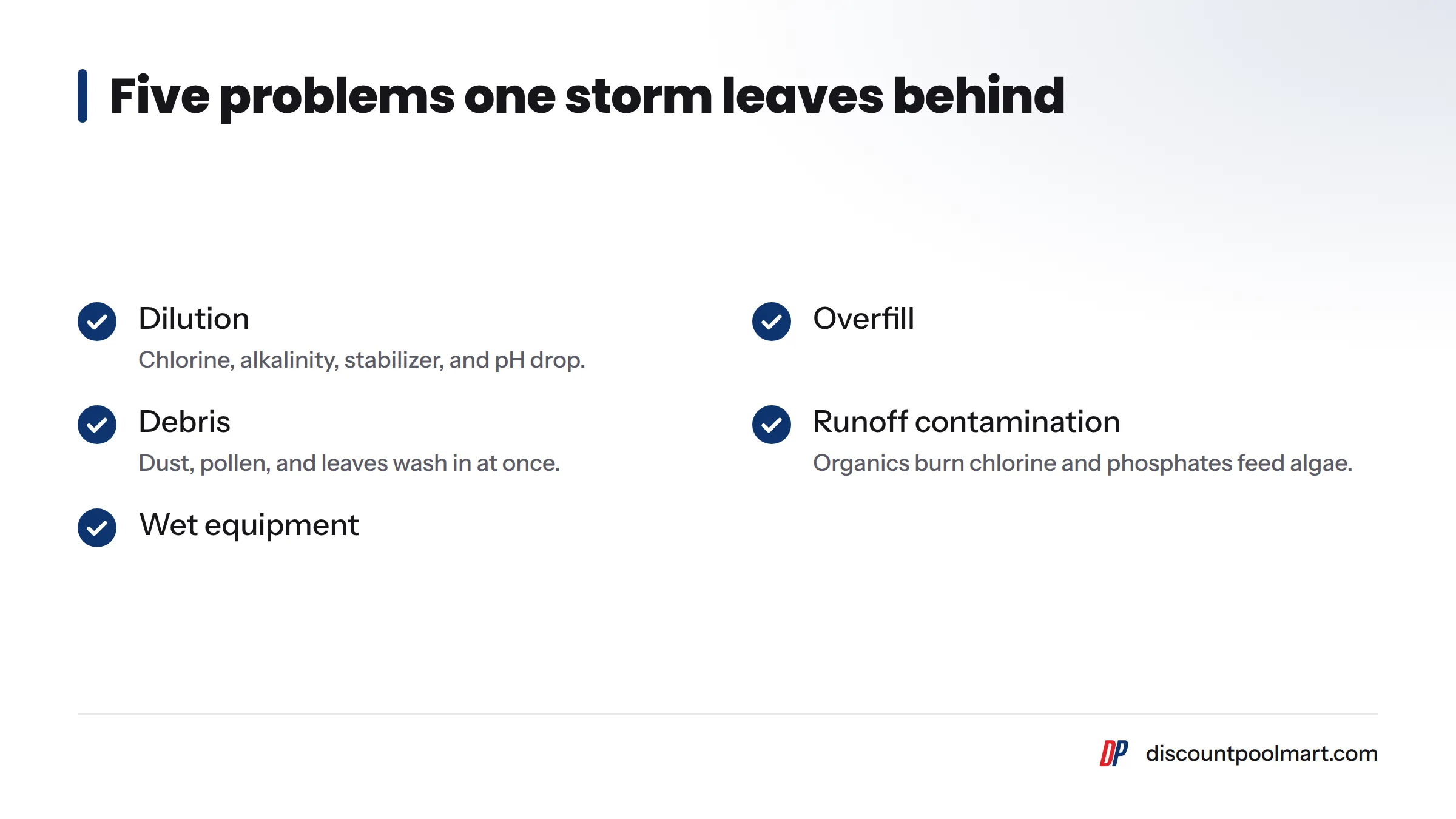
Runoff from planters, lawns, and hardscape carries dirt, fertilizer, and plant matter into the water. Those organics burn through chlorine fast, and the phosphates feed algae. So one storm leaves you with five problems at once: dilution, overfill, debris, runoff contamination, and wet equipment. The steps below deal with all five, and they start with the one that can hurt someone.
Step 1: Make Sure the Equipment Is Safe Before Anything Else
Start at the equipment pad, not the test strip. Here is why: every step after this one involves running the pump.
- Look for standing water around the pump, heater, timer, or panel.
- Check for a tripped breaker or GFCI outlet.
- Look for mud lines on the motor that show how high the water rose.
Warning: If the pump, heater, or electrical panel sat underwater or shows signs of electrical damage, do not switch it on. Ready.gov's flood guidance warns against touching electrical equipment that is wet or standing in water. Call a licensed electrician or a pool professional instead.
Step 2: Lower the Pool Water Level After Rain
When the pool water level is too high after rain, the skimmer weir can't pull floating debris off the surface. Aim for the middle of the skimmer opening. You have three ways to get there:
- Overflow line: Many pools have one, and it drains excess water on its own as long as it isn't clogged.
- Filter "waste" setting: On a multiport valve, "waste" sends water out the backwash line without passing it through the filter.
- Submersible pump: For most owners, this is the fastest and simplest option. Our submersible pump guide covers sizing and setup.
Discharge rules: Don't send pool water into the street or a storm drain unless your local rules allow it. LA Sanitation & Environment runs the city's stormwater program, and storm drains carry water to local waterways without treatment. Outside city limits, check with LA County Public Works. The U.S. EPA's stormwater program explains why cities regulate this.
Step 3: Clean the Pool After a Rainstorm, Starting With the Debris
Net, Brush, and Vacuum
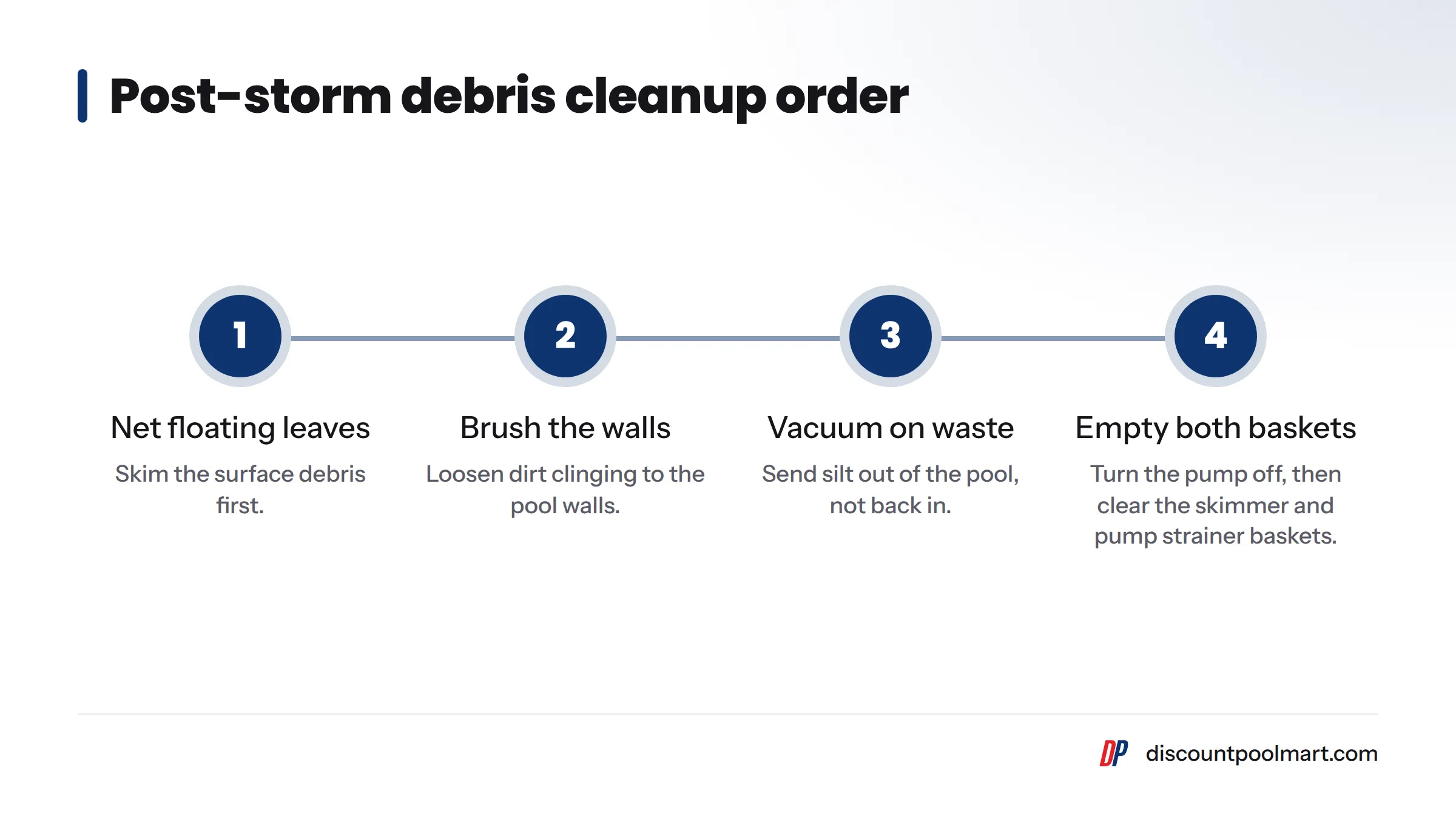
Net the floating leaves first, then brush the walls and vacuum up the silt on the bottom. A wide, deep net like this heavy-duty leaf skimmer saves a lot of trips. If fine dirt keeps clouding the water, follow our guide on how to vacuum a pool and vacuum on the "waste" setting. That way the silt goes out of the pool instead of back into it.
Empty the Skimmer and Pump Strainer Baskets
Turn the pump off, then empty both baskets. A packed basket starves the pump of water, and that can damage it. If you have a Hayward skimmer, a heavy-duty skimmer basket holds up better under storm loads.
Why does cleanup come before shocking? Every leaf left in the water eats chlorine you paid for.
Step 4: Test Pool Chemistry After Rain
Check free chlorine, pH, total alkalinity, and cyanuric acid with test strips or a test kit. Treat this as a damage check. You want to see how far the numbers moved, not rebalance everything from scratch. Our guide on how to test pool water compares strips, drops, and digital readers.
Pay close attention to the stabilizer reading. Diluted cyanuric acid is what sets up the green pool a week later, so read cyanuric acid explained too. Full chemistry balancing will get its own upcoming guide, how to balance pool water.
Not sure what the numbers mean? Bring a water sample to any Discount Pool Mart store and we'll test it for you.
Step 5: Should You Shock Your Pool After Rain? Yes. Here Is How.
Shock only once the debris is out and the pH is corrected. Chlorine works better at the right pH, and in a cleaner pool less of it gets used up on leaves. The right dose depends on your pool's volume and the product you use, so follow the label for amounts and handling. For liquid shock, see liquid chlorine dosing and safe use. Salt pools usually need a manual chlorine boost as well, because the generator can't catch up quickly on its own.
Runoff phosphates combined with low chlorine are the classic setup for an algae bloom, which is why so many pools turn green after rain. Our guide on how to prevent pool algae covers what to do next.
Step 6: Clean the Filter and Run the Pump Until the Water Clears
Storm debris clogs a filter fast. Clean yours based on its type:
| Filter type | What to do after rain |
|---|---|
| Cartridge | Remove the cartridge and hose it off top to bottom |
| Sand | Backwash until the sight glass runs clear, then rinse |
| DE | Backwash, then recharge with fresh DE per the manufacturer |
Run the pump nonstop until the water clears. That usually takes 24 to 72 hours of filtering. If pressure climbs fast or the water stays hazy, check common pool filter problems.
Step 7: Walk the Deck and Equipment Pad for Runoff Damage
Once the water settles, walk the property and look for:
- Mud or debris at the equipment pad
- Clogged deck drains
- Eroded planters or slopes washing toward the pool
- Pump noise, or trouble priming
- Heater exposed to standing water
You can handle some of these yourself. Others need a professional:
| DIY is fine | Call a pro |
|---|---|
| Leaves in baskets | Equipment was submerged |
| Cloudy water | Breaker or GFCI keeps tripping |
| Low chlorine or pH | Burning smell |
| Clogged deck drain | Pump hums but won't prime |
For anything in the right column, start with pool pump repair in Los Angeles. If the motor is getting old, this may be the time to decide whether to repair or replace your pool pump.
What We See on Service Calls After Major LA Storms
Here's how it looks from the service side. After 40 years of serving Southern California pools, I can tell you the same patterns come back every rainy season. The first big storm after a long dry stretch packs pump baskets solid with leaves and seed pods. Pools that looked fine the morning after a storm turn green three or four days later, because the rain diluted both the chlorine and the stabilizer and nobody retested. Equipment pads in low corners of the yard take on water, and those calls tend to be the expensive ones.
Here is my honest opinion: the owners who come through best are the ones who test within a day. Next steps: stop by a Discount Pool Mart store for a free water test, or schedule repair service if your equipment got soaked. And once the storm is behind you, our guide to pool care during a heatwave covers the other extreme.
Post-Rain Pool Care FAQs
Should you shock your pool after a big rain?
Yes. Shock after removing debris and checking pH, because stormwater runoff and organic matter use up free chlorine quickly and leave the pool open to algae. Follow the product label for the dose based on your pool's volume, and keep the pump running afterward.
Pool cloudy after rain? How long until it clears?
Most pools clear in one to three days with balanced chemistry, a clean filter, and nonstop circulation. If the haze lasts longer, read why your pool water is cloudy.
Can green pool water be saved after a storm?
Almost always. Brush, shock, filter, and retest. Our guide on how to treat pool algae walks through the full process.
Do I need to drain my pool after heavy rain?
No. Lower the water only to the middle of the skimmer opening. You'll rarely need a full drain.
Should I run my pool pump during a rainstorm?
Only if the equipment pad is dry and not flooding. When in doubt, turn it off and restart it after you finish Step 1.
Does rain lower pool pH?
Often, slightly. Rain is mildly acidic and also dilutes alkalinity, so test after every heavy storm.
Sources
- What are atmospheric rivers? | NOAA
- pH and Water | USGS Water Science School
- Floods | Ready.gov
- LA Sanitation & Environment | City of Los Angeles
- Los Angeles County Public Works
- Stormwater Discharges from Municipal Sources | U.S. EPA
Related: Southern California pool maintenance calendar, pool care after wildfire ash