Table of Contents
- Why This Question Is Coming Up More Often in Los Angeles
- How Gas Pool Heaters Actually Get Used
- How Pool Heat Pumps Change the Equation
- Installation Costs: The Hidden Difference
- What Heat Pumps Are (and Aren’t) Best For
- Why Heat Pumps Pair Perfectly With Solar Covers
- Final Verdict: Pool Heat Pump vs Gas Heater in Los Angeles
- FAQs
Pool Heat Pump vs Gas Heater: What Works Best for Los Angeles Pools?
For years, gas heaters have been the default option for pool owners in Southern California. They’re familiar, fast, and widely installed. But as energy standards evolve and utility costs rise, more homeowners are asking the same question, pool heat pump vs gas heater:
Which one actually makes more sense for Los Angeles pools?
If you’re planning a new heater or replacing an old one, understanding how these systems differ in real-world use can save you money, time, and frustration.
Why This Question Is Coming Up More Often in Los Angeles
Los Angeles is entering a transition period for pool heating. With Title 24 efficiency requirements tightening and gas infrastructure becoming more expensive to modify, homeowners are starting to look beyond traditional gas heaters.
At the same time, modern heat pump technology has improved dramatically. What used to be considered a niche option is now a mainstream solution—especially in warm, mild climates like Southern California.
This is why the pool heat pump vs gas heater conversation matters more today than it did even five years ago.
How Gas Pool Heaters Actually Get Used
Most gas pool heaters are not run daily. In reality, they’re usually turned on:
Before a weekend swim
Before hosting friends or family
A few times per month for special occasions
They heat water quickly, but they also consume a large amount of energy in a short time. On top of that, installation can be costly if a gas line is not already available at the equipment pad.
How Pool Heat Pumps Change the Equation
A pool heat pump works differently. Instead of creating heat, it moves heat from the surrounding air into the pool water. This makes it extremely efficient in warm climates like Los Angeles.
Despite common myths, humidity is not the key factor—air temperature is. And LA has plenty of that.
In the pool heat pump vs gas heater comparison, heat pumps shine when:
Maintaining a consistent pool temperature
Running for longer periods at lower cost
Avoiding high installation expenses
Many pool owners keep their pool at a comfortable 78–82°F for months using a heat pump and spend roughly the same—or less—than occasional gas heating.
Installation Costs: The Hidden Difference
This is where the pool heat pump vs gas heater decision becomes very clear.
Gas heater installations often require:
Cutting and patching concrete or pavers
Trenching across the yard
Running a new gas line from the meter
Permits and inspections
Those costs can easily add thousands of dollars beyond the heater itself.
Heat pumps are electric. In many cases, they connect to existing plumbing and electrical service with no gas line, no trenching, and no concrete demolition. That alone can make them the more practical choice for Los Angeles homes.
What Heat Pumps Are (and Aren’t) Best For
Heat pumps are ideal for:
Pools used regularly
Long swim seasons
Maintaining steady water temperatures
Energy-conscious homeowners
They are not ideal for:
Spas requiring rapid heating to 104–110°F
Situations where instant heat is the priority
Understanding this helps set realistic expectations and avoids disappointment.
AquaCal TropiCal Inverter Pool Heat & Cool Pump | T70, T100, T130

$3,311.00
$3,999.99
The Next Evolution in Pool Heating The AquaCal TropiCal Inverter Pool Heat Pump introduces a new standard in pool heating innovation, delivering unmatched efficiency, effortless comfort, and modern control for today’s homeowners. As states like California transition toward stricter Title… read more
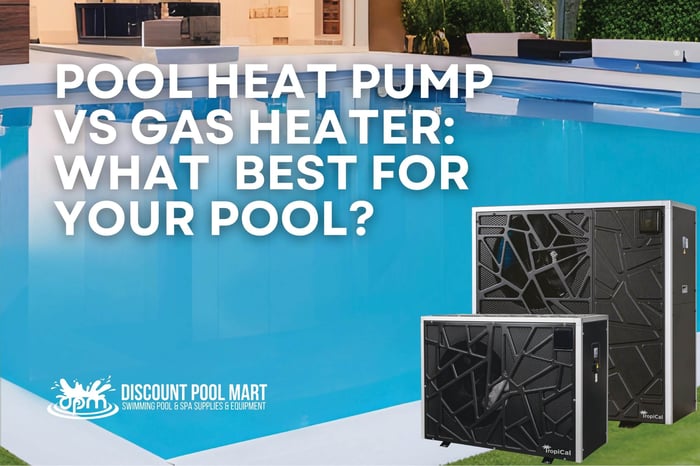
For pool owners comparing a pool heat pump vs gas heater, the TropiCal T100 Inverter Pool Heat Pump is a strong example of how modern heat pump technology delivers efficient, quiet heating without the cost and complexity of gas installation. Designed for Southern California climates, the TropiCal T100 provides reliable heating and cooling while maintaining consistent water temperatures at a lower operating cost. Learn more about the AquaCal TropiCal T100 Inverter Pool Heat Pump and see why heat pumps are becoming the preferred choice for Los Angeles pool owners.
Why Heat Pumps Pair Perfectly With Solar Covers
When comparing pool heat pump vs gas heater, efficiency matters. Heat pumps become even more effective when paired with a solar pool cover, which:
Reduces overnight heat loss
Helps maintain consistent temperatures
Lowers total run time
This combination is one of the most cost-effective ways to keep a pool warm in Southern California.
Final Verdict: Pool Heat Pump vs Gas Heater in Los Angeles
For most Los Angeles pool owners, a pool heat pump is no longer an alternative—it’s the smarter long-term solution.
Between lower operating costs, simpler installation, quieter operation, and alignment with future energy standards, heat pumps are quickly becoming the new normal.
Gas heaters still have their place, but for consistent pool use and long swim seasons, the math is shifting.