
Best Pool Heaters for Los Angeles 2026 | Discount Pool Mart
Which pool heater is best for a Los Angeles pool? For most LA backyards, a heat pump gives the best value for stretching the swim season. A gas heater wins when you want fast heat or a hot spa, and solar costs the least to run on sunny inland roofs. This pool heater buying guide shows you how to choose by climate zone, pool surface area, heat-up speed, operating cost and warranty.
Who's behind the advice? We're Discount Pool Mart, an authorized Pentair, Hayward and Jandy dealer with stores across Los Angeles. Everything below comes from what we sell at our counters and what customers tell us after a full season of running their heaters.
Quick picks for LA pools
- Best overall for LA: Pentair UltraTemp heat pump
- Best heat pump alternative: Hayward HeatPro
- Best for fast heat and spas: Pentair MasterTemp gas heater
- Best compact gas heater: Jandy JXi
- Lowest running cost: Solar pool heating
How Los Angeles Weather Changes Which Pool Heater You Need
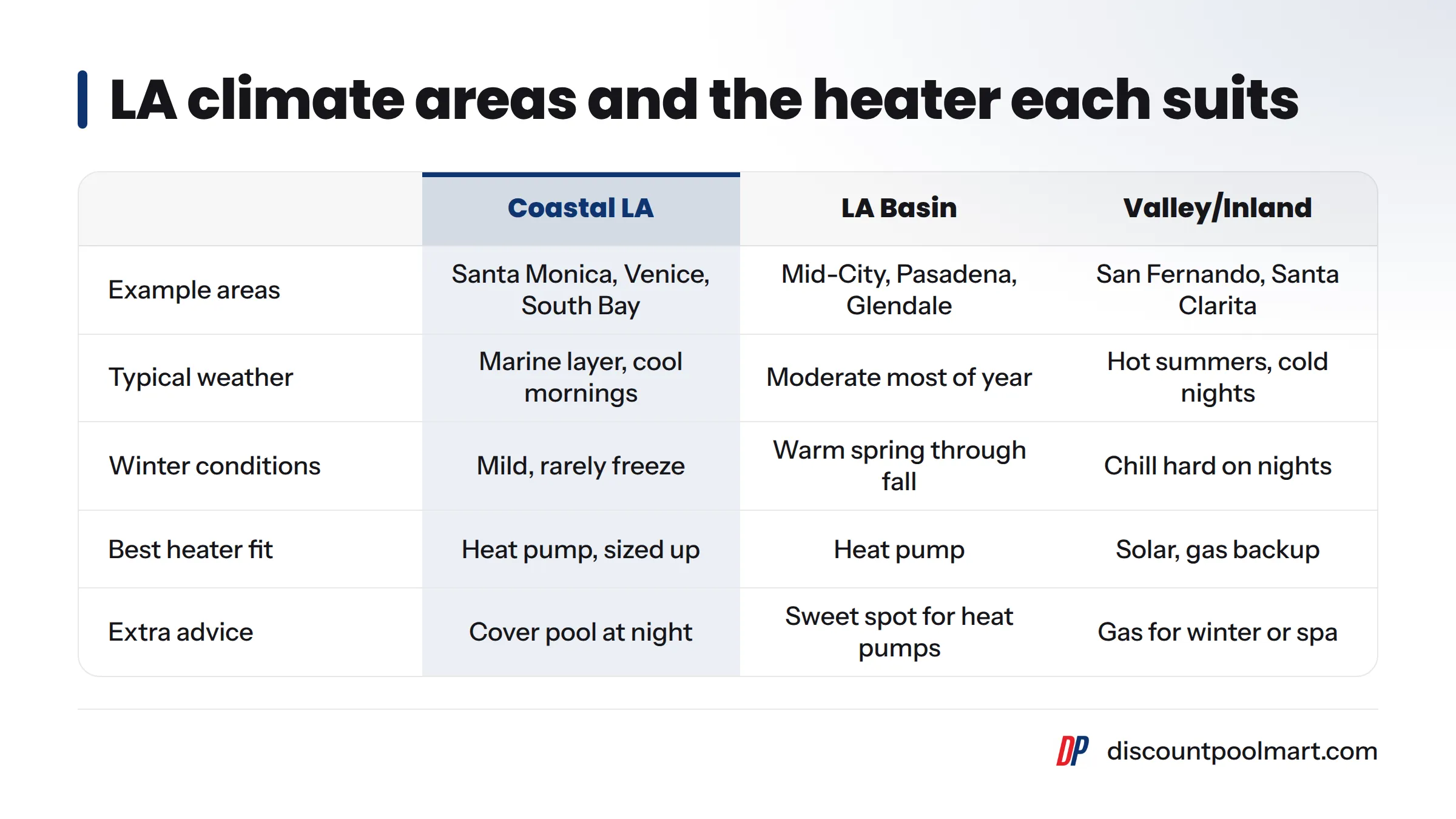
Here's the idea that shapes this whole guide: your ZIP code chooses your heater. LA covers several California Energy Commission building climate zones, roughly zones 6, 8 and 9 for most of the city's pool owners. A heater that shines in Encino can struggle in Playa del Rey.
Why does it matter so much? Heat pumps pull warmth from the air. The U.S. Department of Energy's guide to heat pump pool heaters says they work best when outdoor air stays above roughly 45°F to 50°F. Below that, output drops.
Coastal LA: Marine Layer, Cool Mornings, Mild Winters
Santa Monica, Venice, the South Bay and Palos Verdes rarely freeze. They do sit under the marine layer, though, and gray mornings mean cooler, damper air. A heat pump still works well here, but size it one step up and keep the pool covered at night.
The LA Basin: Moderate Weather Most of the Year
Think Mid-City, Pasadena, Glendale and the Westside away from the beach. The air stays comfortably warm from spring through fall. In my opinion, this is the sweet spot for a heat pump, and it's where we sell the most of them.
The Valley and Inland Areas: Hot Summers, Cold Winter Nights
The San Fernando Valley, Santa Clarita and the San Gabriel Valley bake in summer and chill hard on winter nights. Strong sun makes solar attractive. Owners who swim in winter or run a spa usually add gas as a backup.
What to Look For in a Pool Heater: Sizing, Ratings, Heat-Up Speed, Operating Cost and Lifespan
Let's break it down. Every heater decision comes back to six factors:
- Sizing (BTU output)
- Energy rating (COP or combustion rating)
- Heat-up speed
- Operating cost and payback
- Heat retention with a cover
- Lifespan and warranty
Pool Heater Sizing: BTU Output, Surface Area and Target Temperature
A BTU is the energy needed to raise one pound of water by 1°F. The DOE's gas pool heater guide gives a simple sizing formula:
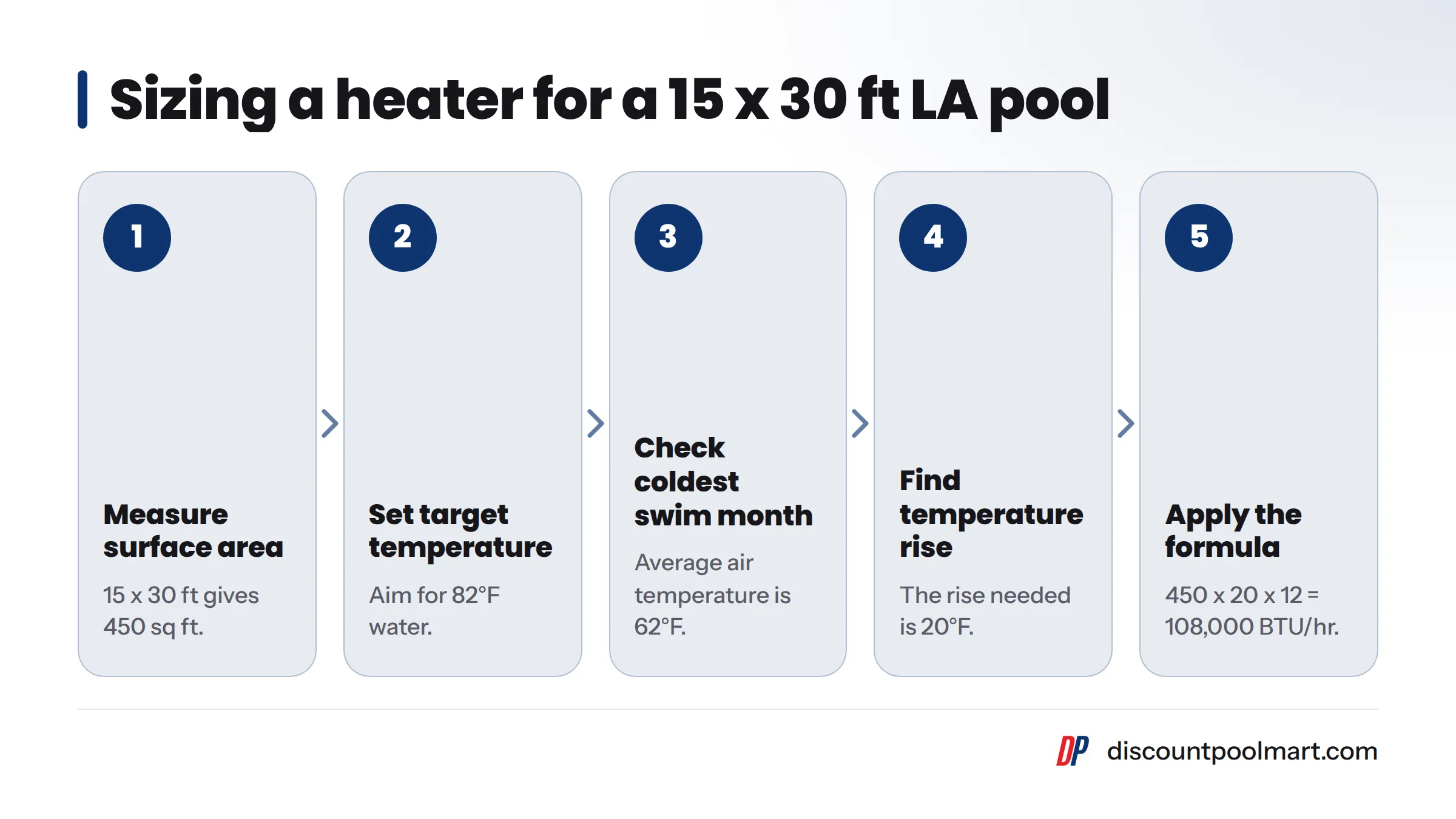
Pool surface area (sq ft) × desired temperature rise (°F) × 12 = BTU per hour needed
Worked example for a typical 15 × 30 ft LA pool:
- Surface area: 15 × 30 = 450 sq ft
- Target water temperature: 82°F
- Average air temperature in your coldest swim month: 62°F
- Temperature rise: 20°F
- 450 × 20 × 12 = 108,000 BTU/hr
Here's a tip from the counter: oversizing a gas heater is fine, because it just reaches temperature faster. Undersizing a heat pump is not, because it may never catch up on a cool coastal evening.
Energy Ratings: COP vs Combustion Rating
COP (coefficient of performance) is the heat a heat pump delivers divided by the electricity it uses. A COP of 5 means five units of heat for every unit of power. See the coefficient of performance entry for the physics. DOE notes most pool heat pumps fall between a COP of 3.0 and 7.0, rated under standard warm-air test conditions.
A gas heater's thermal rating is the share of fuel energy that actually reaches the water, shown as a percentage. California's Title 20 appliance standards from the California Energy Commission set minimum ratings for gas pool heaters sold in the state and ban constantly burning pilot lights.
Heat-Up Speed
Use this formula: gallons × 8.34 × °F rise ÷ effective BTU/hr = hours.
A 20,000-gallon pool with a 400,000 BTU heater at about 84% thermal rating delivers roughly 336,000 BTU/hr. That's about 2°F per hour, before heat loss to wind and evaporation.
Operating Cost and Payback
Natural gas from SoCalGas is usually cheaper per BTU than propane. Heat pumps run on electricity from LADWP or Southern California Edison, depending on where you live. Check your utility's current rates and rebate programs before you decide.
Pool Cover Heat Retention
The cheapest heating upgrade isn't a heater. According to the DOE's swimming pool cover guide, covers can cut pool heating costs by 50% to 70%. Our solar pool cover guide covers sizing and care.
Lifespan and Authorized Dealer Warranty
Manufacturer warranties often require purchase and installation through authorized channels. Buy elsewhere and you may lose coverage the day something fails. If an older unit is acting up, first diagnose a pool heater that isn't working before replacing it.
Before you buy checklist
- Pool surface area and gallons
- Months you plan to swim
- Spa attached, or pool only
- Natural gas line available, or propane only
- Electrical panel capacity for a heat pump
- Space on your equipment pad
- Roof orientation and shade (for solar)
- A pool cover
1. Pentair UltraTemp Heat Pump: Best for Season Extension in Mild LA Weather
Who it's for: Basin and coastal owners who want to swim from March to November without big gas bills. Heat type: Electric heat pump with a titanium heat exchanger. Rating: COP. Check Pentair's spec sheet for each size.
Why It Suits LA Basin and Coastal Pools
The UltraTemp holds water temperature steadily for low running cost. Its digital controls tie into Pentair automation, and our guide to Pentair, Hayward and Jandy app control shows the setup.
Pros and Cons
- Pros: Low operating cost, quiet operation, corrosion-resistant titanium exchanger, strong automation support.
- Cons: Slow to heat from cold, output dips on chilly coastal mornings, needs a dedicated electrical circuit.
Counter note: This is the heat pump we recommend most often for basin pools. Learn how pool heat pumps work before you shop.
2. Hayward HeatPro Heat Pump: Best Heat Pump Alternative for Coastal and Basin Pools
Who it's for: Owners with Hayward equipment, or anyone who wants a proven second option. Heat type: Electric heat pump with a titanium heat exchanger. Rating: COP, published by Hayward.
How It Compares to UltraTemp
The two are close in quality. Choose based on which brand already runs your pump, filter and automation, plus the sizes available for your pool.
Pros and Cons
- Pros: Durable build, quiet fan, fits easily into Hayward systems.
- Cons: Same cool-weather slowdown as any heat pump, slower heat-up than gas.
Counter note: Coastal customers who sized up and used a cover report the fewest complaints about lukewarm mornings.
3. Pentair MasterTemp Gas Heater: Best for Fast, On-Demand Heat and Spas
Who it's for: Spa owners, weekend swimmers and anyone who wants warm water tonight. Heat type: Gas combustion with a heat exchanger. BTU range: About 125,000 to 400,000 BTU across the lineup.
Natural Gas vs Propane
Natural gas costs less to run if you have a line. Propane works on lots without one, but plan for a tank and higher fuel costs. Read up on operating and maintaining a gas pool heater to know what ownership looks like.
Pros and Cons
- Pros: Fastest heat-up, works in any weather, perfect for spas.
- Cons: Highest running cost, shorter lifespan than heat pumps.
Counter note: Pair it with our spa and hot tub supplies for a spa that's ready in under an hour.
4. Jandy JXi Gas Heater: Best Compact Gas Heater for Tight Equipment Pads
Who it's for: Side-yard pads and small LA lots. Heat type: Gas combustion. BTU range: Sizes from Jandy cover typical residential pools and spas.
Footprint and LA Lot Sizes
Many LA homes squeeze the pool pad between a fence and the house. The JXi's small cabinet fits where a bulkier heater won't.
Pros and Cons
- Pros: Compact footprint, fast heat, simple controls.
- Cons: Gas running costs, and clearance rules still apply.
Counter note: Owners replacing old heaters on cramped pads choose the JXi more than any other model.
5. Solar Pool Heating: Best for Low Running Costs on Sunny Inland Lots
Who it's for: Valley and inland owners with a large, unshaded roof. Heat type: Solar collectors with a controller. Payback: DOE's solar pool heater guide puts typical payback at 1.5 to 7 years.
Roof Space, Orientation and Valley Sun
South- and west-facing roofs work best. A San Fernando Valley home with a big south-facing roof is the ideal case.
Pros and Cons
- Pros: Near-zero fuel cost, long collector life, quiet.
- Cons: Slow, weather-dependent, needs roof space, weak in winter.
Gas vs Heat Pump vs Solar: What Our LA Customers Report About Cost and Payback
| Type | Heat-up speed | Rating metric | Upfront cost | Running cost | Lifespan | Best LA zone | Best use |
|---|---|---|---|---|---|---|---|
| Heat pump | Slow to moderate | COP | $$ | Low | Longer than gas | Basin, coastal | Season extension |
| Gas | Fast | Thermal % | $ | High | Shortest | Any | Spas, quick heat |
| Solar | Slow | Sun-dependent | $$$ | Near zero | Long | Valley, inland | Summer swimming |
What Customers Report After Their First Season
Heat pump owners in the basin tell us their bills came in lower than they feared. Gas owners love the speed but often run it less than planned. Solar buyers in the Valley are the happiest about cost, but only from spring through early fall.
The Hybrid Setup Many LA Owners Choose
Here's my favorite setup for pool-and-spa homes: a heat pump keeps the pool warm cheaply, and a gas heater fires up the spa on demand. Our detailed gas vs heat pump vs solar comparison covers the trade-offs in more depth.
Swim University's short overview walks through the same three heater types:
Verdict: Which Pool Heater Type Is Best for Your Los Angeles Pool
Decision tree:
- Need a spa or quick heat? Go gas: MasterTemp, or JXi if pad space is tight.
- Swim spring to fall in the basin or on the coast? Go heat pump: UltraTemp or HeatPro.
- Sunny inland roof and some patience? Go solar, with gas backup for winter swims.
| LA zone | Season extension | Spa or quick heat | Lowest running cost |
|---|---|---|---|
| Coastal | Heat pump (sized up) + cover | Gas | Heat pump + cover |
| Basin | Heat pump | Gas or hybrid | Heat pump |
| Valley/inland | Heat pump or solar | Gas | Solar |
Ready to choose? Visit a Discount Pool Mart store near you and our authorized dealer staff will size a heater for your pool. Buying through us keeps your manufacturer warranty intact, and you get dealer pricing on Pentair, Hayward and Jandy. That's the best value for an LA pool owner. Installation is available through our pool equipment installation service. For pumps and filters, browse our other pool buying guides.
Pool Heater Buying Questions
Which pool heater uses the least energy?
Heat pumps deliver the most heat per unit of energy, often three to seven times what they consume. Solar has the lowest running cost because sunlight is free.
Which pool heater is better, Pentair or Hayward?
Both make quality heaters. Choose the one that matches your existing equipment, fits your pool size and has strong local dealer support.
What size heat pump do I need for a 40,000 litre pool?
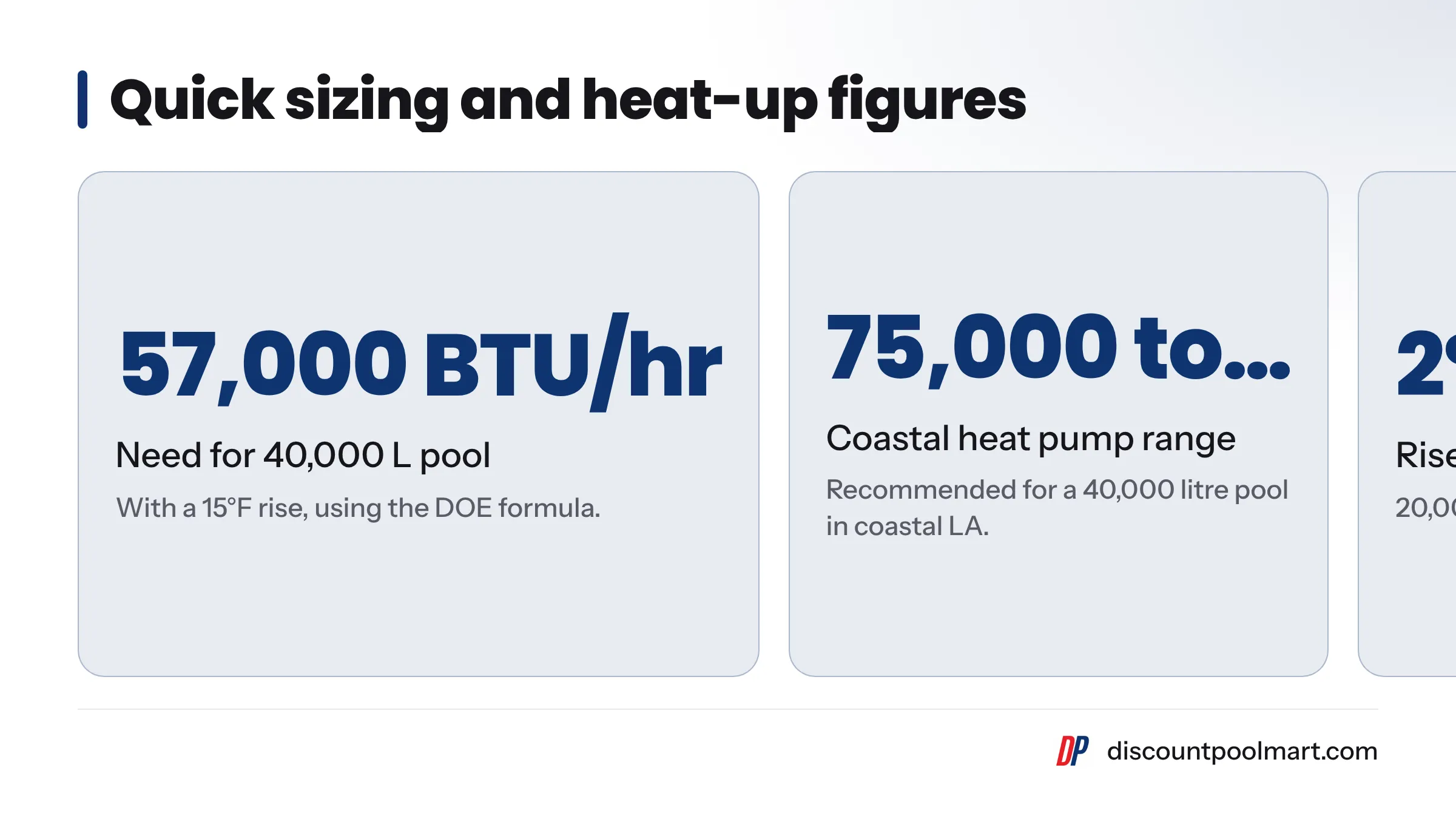
40,000 litres is about 10,600 gallons, or roughly 315 sq ft of surface at a 4.5 ft average depth. With a 15°F rise, the DOE formula gives about 57,000 BTU/hr. In coastal LA, aim for a heat pump in the 75,000 to 110,000 BTU range.
How long does it take to heat a pool with a 400,000 BTU heater?
A 20,000-gallon pool rises about 2°F per hour at 84% thermal rating. Raising it 10°F takes around five hours, longer with wind and no cover.
Can I use a heat pump for my spa in Los Angeles?
Yes, but it's slow. Most LA spa owners pair the heat pump with gas for quick spa heat.